






The Annual Spectacle of Unpreparedness
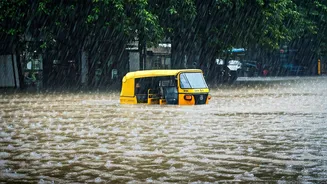
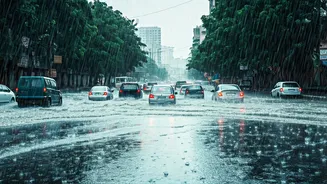
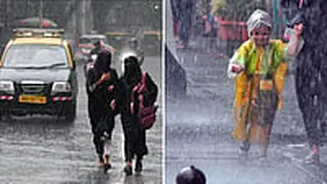
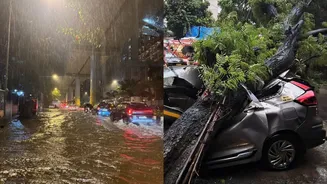
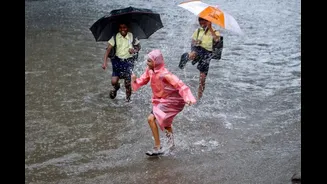
The Southwest Monsoon made a delayed but forceful entry into Mumbai on June 23, 2026, unleashing heavy rains that once again exposed the city's vulnerabilities. [8, 12, 20] Within a day, intense downpours led to widespread waterlogging, traffic disruption,
and the familiar scenes of a city struggling to cope. [7, 20] This predictable chaos ignites an equally predictable response: media frenzy, political finger-pointing, and emergency deployments by the Brihanmumbai Municipal Corporation (BMC). [6, 20] The BMC, for its part, activates its emergency action plan, deploying thousands of personnel and highlighting its pre-monsoon efforts, such as drain desilting and installing water pumps. [6, 14] However, the fact that a single heavy spell can bring low-lying areas to a standstill speaks volumes. This recurring cycle of crisis and response has become a performance, a drama where the city and its residents are the unwilling cast.
On-Paper Prep vs. On-Ground Reality
Ahead of the 2026 monsoon, the BMC claimed to have completed over 100% of its desilting targets by early June. [2] It deployed nearly 950 dewatering pumps across the city, with many enabled by IoT technology for real-time monitoring. [2, 3] An emergency action plan is in place, and authorities have identified and addressed hundreds of the city's 496 flood-prone spots. [2, 6] Yet, these statistics often clash with the on-ground reality. A brief pre-monsoon shower was enough to close the Andheri subway, and the arrival of the monsoon itself quickly inundated areas like Dadar, Sion, Kurla, and Andheri. [2, 20] Critics, including local corporators, have consistently questioned the official desilting figures, arguing the ground situation doesn't reflect the claims. [2] Issues with contractors failing to complete work have also plagued preparations, raising concerns about the effectiveness of these last-minute measures. [18]
The Deeper Malaise: Outdated Systems and Urban Pressures
The core of Mumbai's flooding problem lies in systems that are fundamentally unfit for modern challenges. The city’s stormwater drainage network, largely designed in the early 1900s, can handle only about 25 mm of rain per hour. [23] Today, climate change is bringing short, intense rainfall spells that far exceed this capacity. [17, 23] This infrastructural deficit is compounded by relentless urbanisation. The loss of natural sponges like mangroves and wetlands, which act as crucial buffers, has severely weakened the city's natural flood defences. [5, 23] Encroachments on riverbeds and floodplains, particularly along the Mithi River, further constrict water flow, turning heavy rain into a city-wide crisis. [23, 24] Until these systemic issues are addressed, pumping out water is merely a temporary fix, not a solution.
Beyond Desilting: What Real Preparation Looks Like
A genuine shift from drama to preparation requires a long-term vision. Experts have long advocated for a multi-pronged approach that goes beyond pre-monsoon cleaning. This includes upgrading the entire stormwater drain network, a colossal but necessary task. [23] More importantly, it involves embracing nature-based solutions. The BMC itself has proposed a Rs 10,000 crore plan that includes "Sponge City" concepts—creating urban parks, permeable pavements, and bio-swales that absorb rainwater instead of letting it run off. [16] Protecting and regenerating the city's remaining mangroves and wetlands is equally critical for their role as natural shields against flooding. [5, 16] Furthermore, integrating a citizen-centric, real-time flood warning system can empower residents to make informed decisions, reducing risk and chaos. [17] These are not quick fixes, but sustained, year-round commitments.