






Confirm the Launch Date and Time
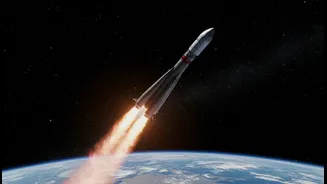
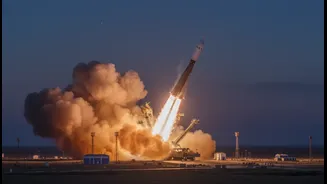
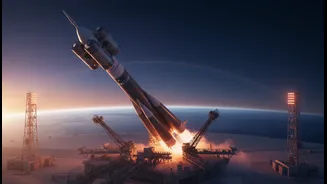
The first and most crucial detail is the schedule. The Soyuz MS-29 spacecraft is targeting a launch on Tuesday, July 14, 2026. Liftoff is planned for 10:47 a.m. EDT (7:47 p.m. Baikonur time) from the Baikonur Cosmodrome in Kazakhstan. As with any space mission,
this time is subject to change based on weather, technical readiness, and other operational factors. Always check NASA's official channels for the most current information on the day of the launch, as even minor issues can cause delays. NASA will begin its live coverage at 9:45 a.m. EDT.
Identify the Crew Members
Three spacefarers will be aboard the Soyuz capsule for its trip to the orbiting laboratory. The crew consists of NASA astronaut Anil Menon, alongside Roscosmos cosmonauts Pyotr Dubrov and Anna Kikina. This will be the first spaceflight for Menon, who was selected as a NASA astronaut in 2021. It will be the second trip to space for both of his Russian colleagues. The backup crew, who train for the same mission in case the primary crew cannot fly, consists of NASA astronaut Deniz Burnham and Roscosmos cosmonauts Dmitry Petelin and Konstantin Borisov.
Understand the Mission's Purpose
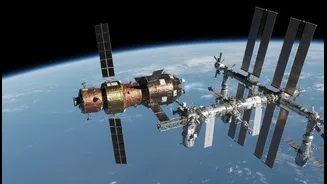
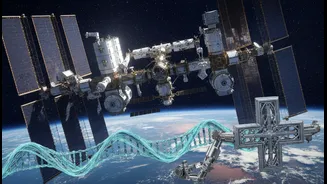
The primary goal of the Soyuz MS-29 mission is to transport the new crew members for a long-duration stay on the International Space Station (ISS). They will join the Expedition 74 crew, contributing to ongoing scientific research and station maintenance. Menon and his crewmates are expected to spend about eight months in orbit, returning to Earth in April 2027. During his time on the station, Menon will conduct a variety of experiments. His research includes studying how microgravity affects blood flow, testing methods for in-space production of semiconductor crystals, and using augmented reality for medical procedures.
The US-Russia Space Connection
This mission highlights the continued partnership between NASA and the Russian space agency, Roscosmos, in operating the ISS. For years, the Russian Soyuz was the only vehicle capable of carrying astronauts to the station after the retirement of the Space Shuttle. While commercial spacecraft from companies like SpaceX now also provide this service, the seat-swapping arrangement ensures that at least one American and one Russian are on the station at all times. This policy of interdependence was designed to maintain cooperation regardless of political turmoil on Earth and ensures the safe operation of the station, with the U.S. largely controlling power and Russia managing propulsion.
Know Where to Watch
For those looking to follow the events live, NASA will provide extensive coverage. The launch and subsequent docking will be broadcast on NASA+, the agency's streaming service, as well as on its YouTube channel and Amazon Prime. Coverage of the launch is scheduled to begin about an hour before liftoff. Following a three-hour journey, the Soyuz is expected to dock with the Prichal module on the ISS at approximately 1:56 p.m. EDT. NASA will also stream the hatch opening and welcoming ceremony for the new crew members, which is expected to begin around 3:30 p.m. EDT.