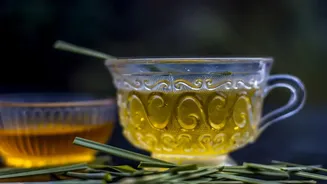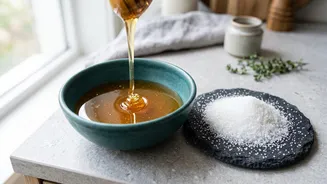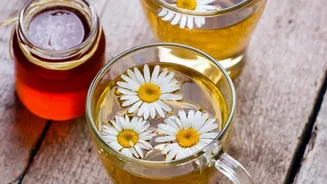






It’s a daily ritual for many: a comforting cup of tea, sweetened just right. But the moment you reach for the sweetener, the classic debate begins. Should it be honey or sugar? Let’s break down which one is the better choice for your brew.
The Calorie Question
At first glance,
the numbers seem to favour sugar. A teaspoon of white sugar contains about 16 calories, while a teaspoon of honey has around 21-22 calories. This is because honey is denser than granulated sugar, so a spoonful of it simply weighs more. However, honey is also sweeter than sugar because it has a higher concentration of fructose. This means you might find yourself using less honey to achieve the same level of sweetness, which could even out the calorie difference in practice.
A Deeper Look at Nutrition
This is where honey starts to pull ahead. Table sugar is pure sucrose, a molecule made of 50% glucose and 50% fructose bonded together. During processing, it is stripped of any other nutrients, which is why it's often referred to as 'empty calories'. Honey, by contrast, is a more complex substance. It’s primarily made of separate fructose and glucose molecules, but it also contains trace amounts of vitamins, minerals like potassium and iron, and powerful antioxidants like flavonoids. These compounds, which sugar completely lacks, are linked to anti-inflammatory benefits and supporting cellular health.
Impact on Blood Sugar
The glycemic index (GI) is a scale that ranks how quickly a food raises blood sugar levels. White sugar has a GI of around 65. Honey's GI is typically lower, averaging around 58, though it can vary widely depending on the type. This means honey raises blood sugar a bit more gradually than sugar does. The higher fructose content in honey is absorbed more slowly, preventing the sharp spike and subsequent crash often associated with sugar. While it's a modest advantage, for those managing blood sugar, honey can be a slightly better option, provided it's used in moderation.
Raw Honey vs. Processed
Not all honey is created equal. The clear, runny honey you find in most supermarkets has been pasteurised (heated) and filtered. This process extends shelf life and gives it a uniform appearance, but it also destroys many of the beneficial enzymes and antioxidants that make honey special. Raw honey, on the other hand, is only lightly strained, keeping its nutrients, pollen, and enzymes intact. It may be cloudy and crystallise over time, but these are signs of a high-quality, unprocessed product. For the full health benefits, raw honey is the superior choice.
Does Hot Tea Destroy the Benefits?
There's a common concern that adding honey to hot tea negates its health benefits. There is some truth to this. High temperatures, particularly those above 60°C, can degrade the delicate enzymes and some antioxidants found in raw honey. Since tea is often brewed with boiling water, stirring in raw honey immediately can reduce its nutritional potency. To preserve as much of the goodness as possible, let your tea cool for a few minutes until it's comfortably warm, not scalding, before adding the honey.