





Start with National Highway Authorities
For anyone travelling on India's national highways, the official channels are the most reliable starting point. The National Highways Authority of India (NHAI) provides real-time information to keep travellers safe and informed. The 'Rajmargyatra' app,
launched by NHAI, is an essential tool for highway commuters. Available for both Android and iOS, this app offers real-time weather conditions, broadcast notifications, and timely traffic alerts. It serves as a one-stop source for comprehensive highway information, including details on toll plazas, petrol pumps, and hospitals. Users can also report highway-related issues like potholes or blockages directly through the app, complete with geo-tagged photos and videos. Beyond the app, calling the National Highway Helpline at 1033 is another direct way to get assistance or information on road conditions.
Consult Official Weather Apps First
Before you even think about routes, check the weather forecast from an official source. The India Meteorological Department (IMD) is the primary agency for weather warnings in the country. Their official mobile app, 'MAUSAM', provides forecasts, radar images, and proactive warnings for severe weather events. The app issues alerts for all districts up to five days in advance using a colour-coded system (Red, Orange, and Yellow) to indicate the severity of the weather. Setting up notifications for rain alerts in your specific location or along your intended route can help you decide whether it's safe to travel in the first place. Postponing a non-essential trip based on a red or orange alert is often the wisest decision.
Use Navigation Apps with a Critical Eye
While navigation apps like Google Maps and Waze are indispensable for real-time traffic updates, they have some limitations during extreme weather. These apps often rely on crowdsourced data, which means a road closure or waterlogging is only reported after other users have encountered it. However, they are becoming more integrated with official sources. NHAI has collaborated with Google Maps and MapmyIndia to integrate official alerts about work-in-progress zones, accident-prone areas, and closures directly into their navigation services. Waze also allows users to report weather-related hazards, which can alert other drivers in the area. A smart strategy is to use these apps in tandem with an official source. Cross-reference the route suggested by Google Maps with information from the Rajmargyatra or MAUSAM apps to get a more complete picture.
Check State and Local Police Advisories
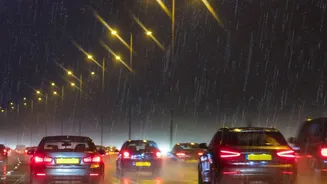
Traffic management within cities and on state highways is the responsibility of local authorities. State and city traffic police departments are invaluable resources during heavy rainfall. Many departments actively use social media, especially X (formerly Twitter), to disseminate real-time information on waterlogging, traffic diversions, and road closures. Before travelling through a major city or on state-managed roads, search for the official social media handle of the local traffic police. These updates are often the fastest way to learn about localised disruptions that might not appear on national-level apps. Following their advisories can help you navigate around choke points or decide to delay your travel until conditions improve.
Don't Underestimate Local Knowledge
In addition to digital tools, traditional methods of gathering information remain highly effective. If you are travelling to a remote or hilly area, try to contact your hotel, host, or a local contact at the destination before you start your journey. They will have the most current, ground-level information about road conditions in their immediate vicinity, especially regarding landslides or flash floods that digital maps may not have registered yet. Building buffer time into your travel schedule is also crucial during the monsoon; a journey that normally takes six hours could easily take longer due to rain-related slowdowns. Never attempt to cross a road that is heavily waterlogged or where locals have advised against it. It's always better to wait for conditions to improve than to risk getting stranded.