





A New Look at a Cosmic Icon
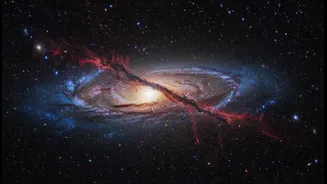
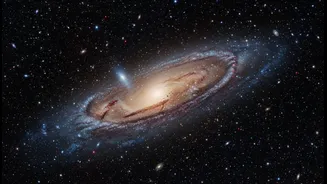
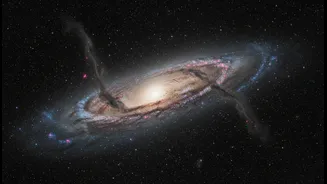
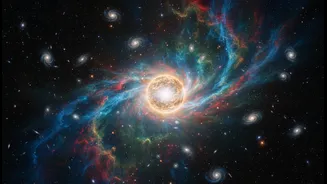
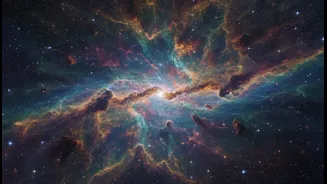
This year's anniversary image features Centaurus A, a massive and peculiar galaxy located a relatively close 11 million light-years from Earth. While it's a familiar target for astronomers, Webb's powerful infrared instruments have peeled back its layers
like never before. Previous images from telescopes like Hubble were obscured by the galaxy's thick lanes of cosmic dust. But Webb's view cuts through the dust, revealing the fiery glow of stellar nurseries and the intricate dance of gas and stars. This new portrait is not just one image but a combination of data from Webb's Near-Infrared Camera (NIRCam) and Mid-Infrared Instrument (MIRI), providing a multi-layered perspective on this fascinating object. The image showcases the aftermath of a colossal galactic merger that happened billions of years ago, which gave Centaurus A its strange shape and triggered intense bursts of star formation.
More Than Just a Pretty Picture
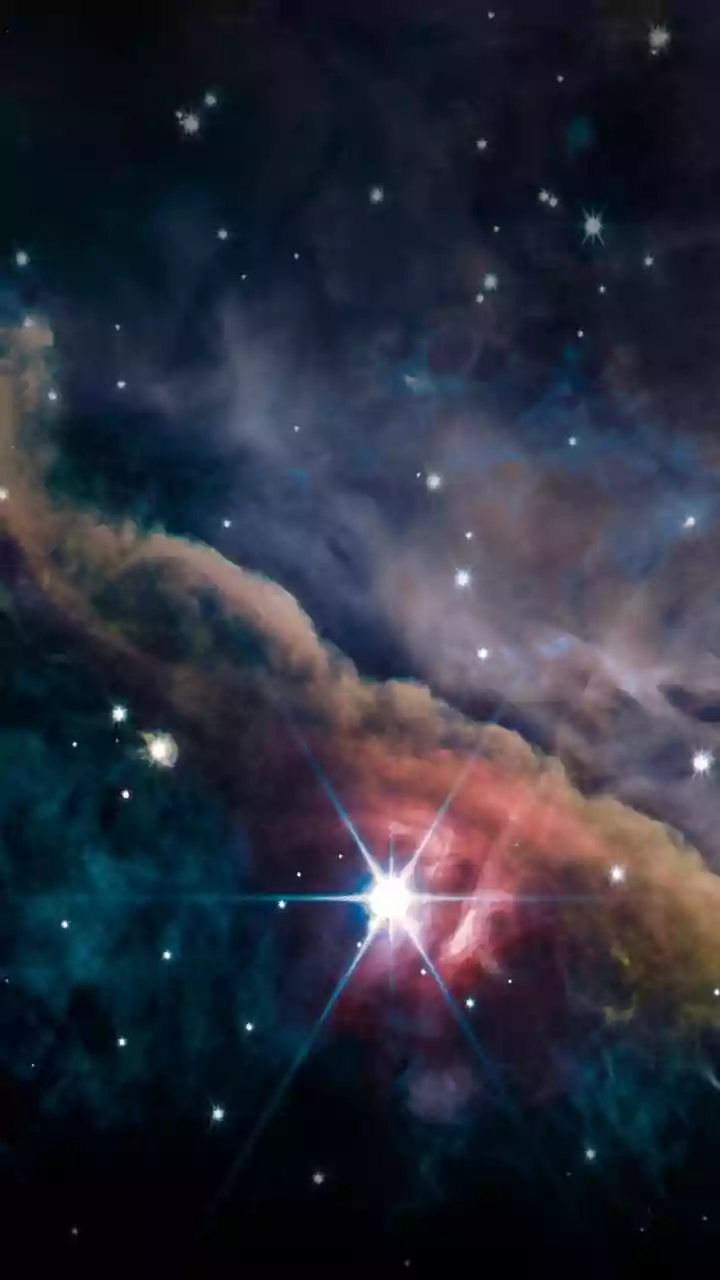
Anniversary images are chosen not just for their beauty, but for their scientific value, and Centaurus A is a treasure trove. It hosts a supermassive black hole at its core that is actively feeding, spewing out powerful jets of material that shape the entire galaxy. By studying these new, incredibly detailed images, scientists can investigate the relationship between a galaxy and its central black hole, a key process in cosmic evolution. The sharpness of Webb's vision allows astronomers to study Centaurus A star by star, mapping out where new stars are forming and where older ones are shedding their material back into the galaxy. Each anniversary image builds on a legacy; the first-year image showed the Rho Ophiuchi star-forming region, the closest one to Earth, while the second focused on two interacting galaxies nicknamed "the Penguin and the Egg". Each one provides a new piece of the puzzle.
Four Years of Changing Astronomy
Since its first images were released in July 2022, the James Webb Space Telescope has fundamentally transformed our view of the universe. Its primary mission is to study every phase of cosmic history, from the first glimmers after the Big Bang to the evolution of our own solar system. In just four years, it has delivered on that promise in spectacular fashion. The telescope has discovered what appear to be impossibly massive galaxies in the early universe, challenging our models of how quickly these cosmic structures could form. It has peered into the atmospheres of planets orbiting other stars, known as exoplanets, detecting carbon dioxide and even hints of water, crucial steps in the search for habitable worlds. Closer to home, it has given us breathtaking new views of the planets in our own solar system, like Neptune's faint, dusty rings.
A Legacy of Wonder and Discovery
Beyond the specific scientific discoveries, JWST has played an invaluable role in inspiring awe and curiosity around the globe. Each image released is not just data for scientists, but a work of art from the cosmos itself, accessible to everyone. These annual anniversary releases have become a tradition, a moment to pause and appreciate our ever-expanding understanding of the universe. The mission, a collaboration between NASA, the European Space Agency, and the Canadian Space Agency, has already exceeded its planned operational lifetime and continues to perform flawlessly. As it embarks on its fifth year of science, the telescope will continue to map the unseen universe, from mysterious 'Little Red Dots' that could be infant black holes to the largest cosmic structures ever observed. It's a reminder that for every question answered, Webb uncovers a dozen new ones to explore.