





The City's Hidden Food Web
Most of us don't think about how food gets to our plate until there's a problem, like when tomato prices suddenly shoot up. But behind every meal is a complex urban food system. This isn't just about trucks on a highway; it's the entire network of wholesale
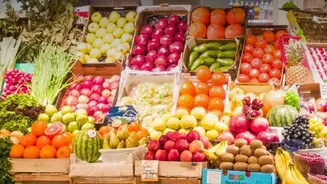
markets (mandis), cold storage facilities, small-scale distributors, and the vast army of retailers—from supermarkets to the vegetable cart vendor on your street. This system is responsible for feeding millions daily, and its efficiency directly impacts the freshness, cost, and variety of food available to you. Any disruption, whether from weather or logistical hurdles, can be felt in kitchens across the city.
The Challenge of the Last Mile
Getting food to a city's border is only half the battle. The real challenge is often the 'last-mile' distribution within the urban sprawl. India's food supply chains are notoriously long and fragmented, involving multiple intermediaries. This inefficiency leads to significant post-harvest losses, especially for perishable items like fruits and vegetables. Poor road infrastructure, traffic congestion, and a lack of adequate cold storage facilities mean that by the time produce reaches your local vendor, its quality may have degraded and its price increased. These persistent, quiet problems in the supply chain ultimately cost consumers and affect what they can afford to eat.
India's Urban Food Deserts and Swamps
The concepts of 'food deserts' and 'food swamps' are becoming increasingly relevant in urban India. A food desert isn't necessarily an area with no food; it’s a neighbourhood where access to affordable, fresh, and nutritious food is severely limited. Instead, these areas might be 'food swamps', saturated with outlets selling cheap, calorie-dense, and highly processed foods. This creates a paradox where people may have plenty to eat but suffer from 'hidden hunger' or malnutrition due to a lack of essential nutrients. For many low-income families, the financial choice between an inexpensive packet of biscuits and a pricier bundle of fresh greens is a difficult one, creating a stark nutritional divide within the same city.
How Urban Planning Shapes Your Plate
Urban planning, or the lack thereof, plays a crucial role. Decisions about zoning laws, market locations, and transport networks can either help or hinder access to healthy food. In many upscale neighbourhoods, for instance, the entry of informal vegetable vendors is restricted, limiting residents' access to fresh, local produce that might be readily available in other parts of the city. A well-planned city integrates food needs into its design, ensuring that all neighbourhoods have a mix of formal and informal retail options. Without this foresight, we risk creating deeper health disparities, where your postcode determines your diet more than your personal preferences.
A Glimpse of the Future?
The rise of online grocery apps has changed the game for some, offering convenience and access to a wide variety of foods at the tap of a button. Studies during the pandemic showed how vital these digital platforms became when traditional supply chains were disrupted. However, their reach is often limited to more affluent, digitally-savvy populations and may not solve the core problems for the urban poor. A more resilient and equitable solution involves a multi-pronged approach: strengthening the entire supply chain, supporting informal vendors who are the backbone of food distribution for many, and promoting urban agriculture initiatives like community or rooftop gardens to shorten the distance from farm to fork.