


Our Past, A Finite Resource Under Threat
Archaeological sites are the fragile anchors to our collective past, providing invaluable insights into ancient civilisations. Today, these sites are facing an unprecedented threat not from looters or neglect, but from the very environment that preserved
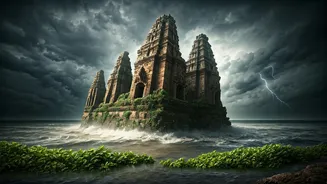
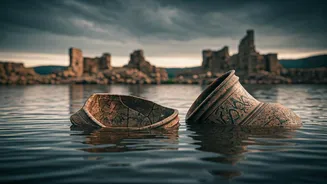
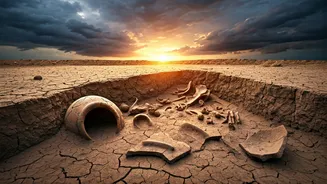
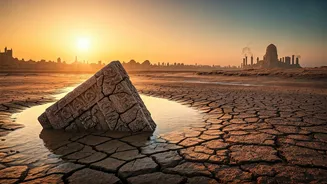
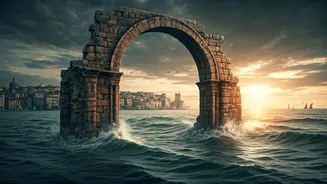
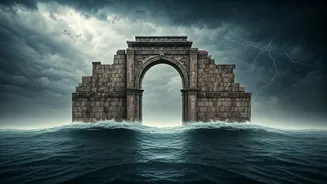
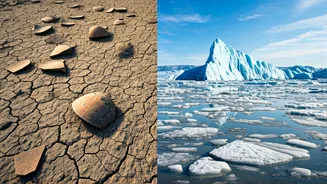
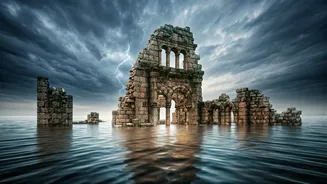
them. Climate change is accelerating the frequency and intensity of extreme weather events, which are wreaking havoc on our shared cultural heritage. More frequent and powerful storms cause devastating coastal erosion, washing away entire settlements. Thawing permafrost in the Arctic exposes delicate organic artifacts to rapid decay, while increased rainfall in other regions leads to landslides and floods that can obliterate sites overnight.
From Rising Seas to Scorching Fires
The threats are diverse and relentless. In Scotland, the neolithic village of Skara Brae, older than the pyramids, is battered by intensifying coastal storms. On Rapa Nui, also known as Easter Island, the iconic moai statues are at risk of being consumed by rising seas that erode the platforms they stand on. In the American Southwest, increased rainfall and flash floods wash away ancient structures and rock art panels. Meanwhile, hotter and drier conditions lead to more frequent and destructive wildfires, which have uncovered and sometimes damaged hundreds of previously unknown sites. Even subtle changes have major consequences; shifting temperatures and humidity can make materials like wood brittle and cause stone to crumble from salt crystallisation.
More Than Just Artifacts
When an archaeological site is lost, we lose more than just old pots and stones. We lose irreplaceable data about humanity's journey. These sites are our only source of information for much of human history, teaching us about past technologies, diets, social structures, and our ancestors' own adaptations to environmental change. The archaeological record can hold lessons for our own future, showing how societies thrived or collapsed in the face of climate shifts. Losing these sites is akin to tearing pages from our collective memory, leaving gaps in our understanding of who we are and where we came from. The destruction represents a loss of cultural identity for communities around the world whose heritage is deeply connected to these places.
A Race Against Time to Preserve History
Recognising the urgency, archaeologists and conservationists are in a desperate race against the clock. One key strategy is risk assessment, using modern tools to map which sites are most vulnerable. This allows for prioritisation, as experts acknowledge the painful reality that not everything can be saved. For the most threatened sites, a range of solutions are being deployed. Digital preservation, using technologies like 3D laser scanning and drone-based photogrammetry, creates detailed virtual copies of sites before they are gone. In other cases, 'rescue archaeology' involves rapid excavation to retrieve as much information as possible. Physical interventions are also used, such as building protective shelters over sites like the Megalithic Temples of Malta or using geotextile mats and sandbags to stabilise underwater heritage.