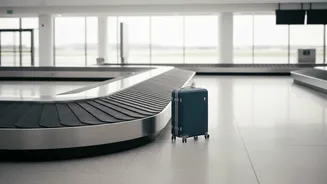







The Ruling That Reaffirms Your Rights
In a decision that strengthens the hand of passengers, a District Consumer Commission recently ordered a private airline to pay significant compensation for a three-day baggage delay. The ruling, reported on August 5, 2026, saw the court award a passenger a full
reimbursement for essential purchases worth ₹8,923, plus ₹20,000 in compensation under existing aviation guidelines, and an additional ₹25,000 for service deficiency and legal costs. This case serves as a powerful reminder that airlines are obligated to compensate you not just for lost items, but for the tangible costs and inconvenience caused by a delay. The court affirmed that failing to do so is a clear 'deficiency in service'.
Know What You Are Owed
Under the Directorate General of Civil Aviation (DGCA) Passenger Charter, airlines' liability for delayed, lost, or damaged baggage on domestic flights is up to ₹20,000 per passenger. For international flights originating from India, the Montreal Convention applies, offering a much higher cap of approximately 1,288 Special Drawing Rights (SDR), which translates to around ₹1.5 lakh. The key takeaway from the recent ruling is that these are not just guidelines; they are enforceable rights. Airlines are required to reimburse reasonable, immediate expenses for necessities like clothes and toiletries when your bag is delayed.
The First 30 Minutes: Your Airport Action Plan
The moment you realise your bag is missing, the clock starts ticking. Do not leave the baggage reclaim area. Your first and most critical step is to locate the airline’s baggage service desk and file a Property Irregularity Report (PIR). This document is the official record of your missing bag and is essential for any future claim; without it, an airline can legally reject your case. Ensure you get a copy of the PIR with a reference number. This number will allow you to track your bag's status through the airline’s system, often a global platform called WorldTracer. Keep your boarding pass and baggage claim tags safe, as you will need these for the report.
The Art of Keeping Receipts
Once your bag is officially delayed, you are entitled to reimbursement for essential purchases. This is where meticulous record-keeping becomes your best tool. Buy only what is necessary for the interim period — think a change of clothes, basic toiletries, and any other urgent necessities you were forced to go without. Keep every single receipt, whether physical or digital. A good practice is to take a photo of each receipt immediately after purchase. When you file your claim, you will need to submit these proofs of purchase. Vague claims without documentation are easily dismissed. Your detailed receipts form the backbone of your claim for reimbursement.
Filing Your Claim For Compensation
With your PIR filed and receipts in hand, the next step is formal communication with the airline. Most airlines have an online portal for submitting baggage claims. You have 21 days from the date the baggage is delivered to you to file a claim for expenses incurred due to the delay. In your claim, clearly list all the items you purchased, their cost, and attach copies of the corresponding receipts. Also include your PIR reference number and flight details. If your bag is not found within 21 days, it is officially declared 'lost', and you can then claim for the value of the bag and its contents, in addition to the interim expenses you already incurred.