








Prepare Your Vehicle Before the Skies Open
A safe journey in the rain begins before you even turn the key. Taking the time to perform pre-monsoon checks on your vehicle is critical. Your tyres are the single most important component for grip on wet roads. [6] Ensure they have adequate tread depth—at
least 3mm is recommended for safe wet-weather driving—and are inflated to the manufacturer's specified pressure. [4, 17] Worn-out tyres cannot effectively channel water away and significantly increase the risk of an accident. [15, 21] Equally vital are your windscreen wipers. If they leave streaks or fail to clear water effectively, replace them. [3] Surprisingly, a low percentage of car owners in India proactively change their wipers before the monsoon. [5] Finally, check all your lights: headlights, tail lights, and indicators must be in perfect working order to ensure you can see and be seen in low-visibility conditions. [3, 20]
The Danger of Hydroplaning
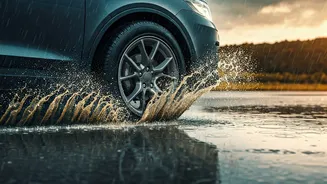
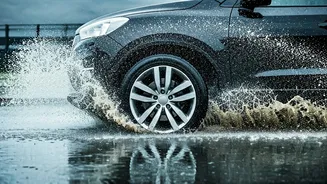
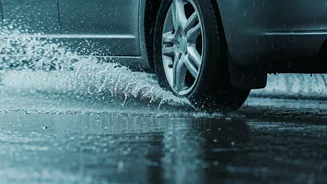
One of the greatest risks on wet roads is hydroplaning (or aquaplaning). This occurs when a layer of water builds up between your tyres and the road surface, causing the vehicle to lose contact with the road and essentially glide uncontrollably. [7, 10, 19] When this happens, steering and braking become ineffective. [7, 10] Hydroplaning is most likely to occur at higher speeds, which is why slowing down is the most effective preventative measure. [2, 10] The first 10 to 15 minutes of a rainfall are often the most dangerous, as the fresh rain mixes with oil and debris on the road, creating an exceptionally slick film. [2, 14] Disengaging cruise control is also crucial, as you need to be in full manual control to react instantly to changes in traction. [4, 12]
Adjust Your Driving Style: Slow Down and Keep Distance
The fundamental rule for driving in the rain is to reduce your speed significantly. [9, 11] Your vehicle's reaction and braking times are much slower on wet surfaces. [9, 21] It is advisable to increase the typical following distance from the car in front of you to at least a 3-4 second gap, or even more in heavy downpours. [2, 4] This extra space provides a crucial buffer, giving you more time to react and stop safely. Avoid any sudden manoeuvres, including abrupt braking, sharp turns, or sudden acceleration, as these actions can easily unsettle the car and lead to a loss of traction. [15] When braking, do so gently and consistently rather than slamming on the pedal. [8] If your car begins to hydroplane, your instinct might be to brake hard, but you should not. Instead, ease your foot off the accelerator and steer gently in the direction you want to go until you feel the tyres regain grip. [10, 12]
Navigate Road Hazards with Caution
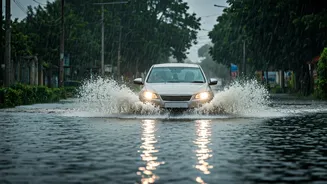
Indian roads during the monsoon are notoriously unpredictable. [6] Puddles and waterlogged sections should be avoided whenever possible, as you cannot be sure of their depth or what hazards—like potholes or debris—may be hidden beneath the surface. [9, 17, 21] Driving through deep water can cause your engine to stall; if this happens, do not attempt to restart it, as this can lead to severe and permanent engine damage known as hydrostatic lock. [8] Painted road markings, such as zebra crossings, become extremely slippery when wet, so avoid braking hard on them. [8] Visibility is another major challenge. Use your low-beam headlights, even during the day, to make your vehicle more visible to others. [8, 11] Avoid using high beams, as they can reflect off the rain and impair the vision of oncoming drivers. [8]