





The New FDI Blueprint
In a landmark move, the Indian government has amended its FDI policy for the space sector, moving away from a restrictive, government-approval-only model. Previously, foreign investment in satellite establishment and operation required case-by-case government clearance.
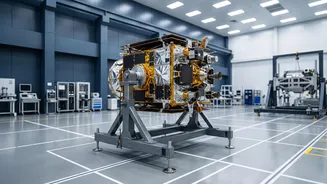
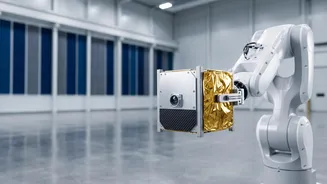
The new rules create a tiered system with more welcoming entry points. For manufacturing components and subsystems for satellites and ground segments, 100% FDI is now permitted under the automatic route, requiring no prior government approval. For manufacturing and operating satellites, the automatic route is open for up to 74% FDI. For more sensitive areas like launch vehicles and spaceports, the automatic limit is set at 49%, with larger investments still requiring government scrutiny. This nuanced approach aims to attract capital while safeguarding strategic national interests.
A Strategic Shift to Fuel Growth
This policy overhaul is a cornerstone of the Indian Space Policy 2023, which aims to transition the sector from being ISRO-dominated to a more robust, privatised, and commercial ecosystem. The goal is to grow India's share of the global space economy, with ambitions for the domestic market to reach USD 44 billion by 2033. By liberalising investment norms, India is signalling to the world that it is open for business. The move is designed to inject much-needed capital into the burgeoning private space industry, which has grown from just a handful of startups a few years ago to over 400 today. This financial catalyst is expected to help Indian companies scale up, adopt cutting-edge technologies, and become more competitive on the global stage.
Courting Global Giants and Expertise
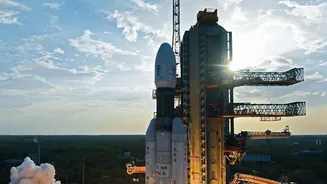
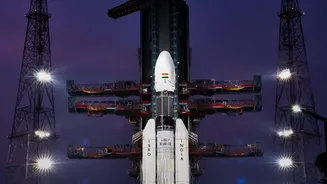
The clearer, more permissive FDI rules are expected to attract significant interest from global aerospace and technology giants. By lowering entry barriers, India becomes a more viable destination for foreign companies looking to collaborate with or invest in Indian enterprises. This influx of foreign capital is not just about money; it is also about the transfer of advanced technology, managerial expertise, and access to global supply chains. For foreign investors, India offers a unique combination of a rapidly growing market, a large pool of skilled engineers, and a reputation for cost-effective innovation, as demonstrated by missions like Chandrayaan-3. This could lead to joint ventures and partnerships that build everything from satellites to ground station equipment, integrating Indian firms directly into the international space economy.
Empowering India's Private Space Players
For India's domestic space startups, the new FDI policy is a game-changer. These companies, many of which are working on innovative launch vehicles, satellite constellations, and downstream applications, need significant capital to move from design to deployment. Easier access to foreign funding will enable them to accelerate research and development, scale manufacturing, and compete for international contracts. The policy also helps small and medium enterprises (MSMEs) in the space supply chain to upgrade their capabilities and meet global standards, potentially transforming them from local suppliers for ISRO into exporters of high-quality aerospace components. The government, through agencies like IN-SPACe, is also working to generate domestic demand and provide support, ensuring that private players have a thriving ecosystem in which to grow.
The Road Ahead: Challenges and Opportunities
While the policy shift creates immense opportunity, the path forward requires careful navigation. Indian companies will face increased competition from global players entering the market. Furthermore, regulatory processes, while streamlined, will still need to be managed efficiently by bodies like IN-SPACe to ensure that authorisations are granted in a timely manner. The success of this policy will depend on how effectively these foreign partnerships can be translated into tangible projects that enhance India’s indigenous capabilities. However, the direction is clear: by combining its proven engineering prowess with global capital and technology, India is positioning itself not just as a launch destination, but as a comprehensive partner in the rapidly expanding commercial space industry.