



A Cosmic Crime Scene
Located a relatively close 11 million light-years away, Centaurus A is one of the most studied objects in the southern sky. It’s a peculiar galaxy, the result of a colossal merger between a large elliptical galaxy and a smaller spiral galaxy that took
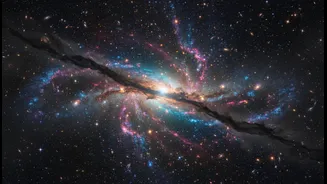
place around two billion years ago. This ancient crash left behind a chaotic scene: a bright, roundish galaxy sliced through by a prominent, dark lane of dust. For years, this dust has acted like a curtain, hiding the galaxy's heart from view. Astronomers knew a story of creation and destruction was happening behind it, but the details were frustratingly fuzzy.
Webb's Infrared Superpower
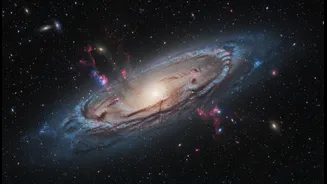
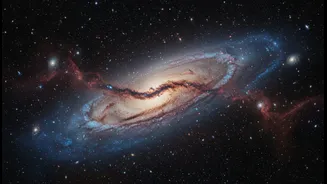
This is where the James Webb Space Telescope changes the game. Unlike telescopes that see visible light (like Hubble), Webb is designed to see in infrared. This unique vision allows it to peer directly through the dense dust clouds that have long obscured our view. Previous infrared telescopes like the Spitzer Space Telescope could see the larger structures, but Webb's incredible resolution brings the scene into sharp focus. The new image cuts through the haze, resolving millions of individual stars and intricate structures for the first time. What previously looked like a murky band of dust is now revealed as a glowing, complex tapestry of gas, dust, and newborn stars.
New Clues from the Wreckage
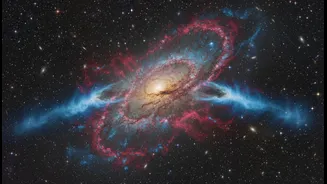
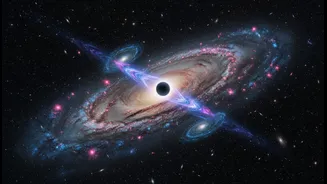
With this new clarity, astronomers can now perform a kind of galactic archaeology. Each star Webb reveals helps build a timeline of the galaxy's turbulent history—from stars that existed before the merger to new generations ignited by the collision itself. The images highlight glowing red pockets, which are stellar nurseries where new stars are forming within the dust. Webb has also detailed how the supermassive black hole at the galaxy's center is actively feeding on the debris from the merger. This process launches powerful jets of energy that shape the galaxy, creating a complex interplay where the black hole can both trigger star formation by compressing gas and stifle it by blasting material away.
The Lessons of a Merger
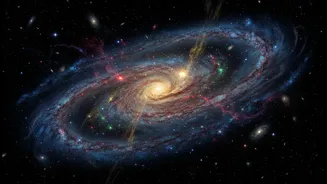
The study of Centaurus A provides a perfect laboratory for understanding one of the most fundamental processes of cosmic evolution: galaxy mergers. These collisions are not just destructive; they are profoundly creative. When galaxies collide, their gas and dust clouds are violently compressed, triggering a massive wave of star formation known as a 'starburst'. The Centaurus A collision provided the galaxy with an abundance of this raw material, fueling its ongoing star birth and feeding its central black hole. By studying this process up close, astronomers can refine their models of how all galaxies, including our own, grow and change over billions of years.
A Glimpse into Our Own Future
Studying the aftermath of Centaurus A's collision isn't just an academic exercise; it's a preview of our own cosmic destiny. Our Milky Way galaxy is on a collision course with our nearest large neighbour, the Andromeda galaxy. In about 4.5 billion years, they will merge in a cosmic event that will reshape our galactic neighbourhood. While that’s a long time away, Webb's observations of Centaurus A provide a valuable look at what happens when galaxies collide. The new image teaches us that these events are key drivers of change in the universe, turning cosmic violence into a powerful engine for creation and rebirth.