





The Ultimate Safety Check
The Indian Space Research Organisation (ISRO) successfully conducted the second integrated air drop test (IADT-02) for the Gaganyaan mission at Sriharikota. This test is not just another technicality; it's one of the most critical steps in ensuring the safety
of the Indian astronauts, or 'Vyomnauts', who will eventually travel in the crew module. The test recreates the final, nail-biting moments of the mission: the return to Earth. An aircraft drops a module from a significant height to simulate its re-entry, testing the complex sequence of parachute deployments needed to slow it down for a safe splashdown in the ocean.
Why This Airdrop Test Was So Critical
The primary goal of the IADT-02 was to validate the performance of the parachute system. This isn't just one big parachute, but a sophisticated system of ten parachutes that must deploy in a precise sequence. The system is designed to handle various failure scenarios, ensuring that even if one parachute fails to open, the crew module can still decelerate to a safe velocity for landing. This test specifically helps engineers understand the spacecraft's orientation and stability during its descent and splashdown. Passing this test builds immense confidence in the crew recovery systems, which are paramount for a human spaceflight mission. The entire procedure is a complex ballet of engineering, involving not just ISRO but also the Indian Air Force and Navy, who are responsible for dropping the module and recovering it from the sea, respectively.
A Symphony of Complex Systems
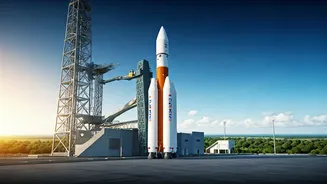
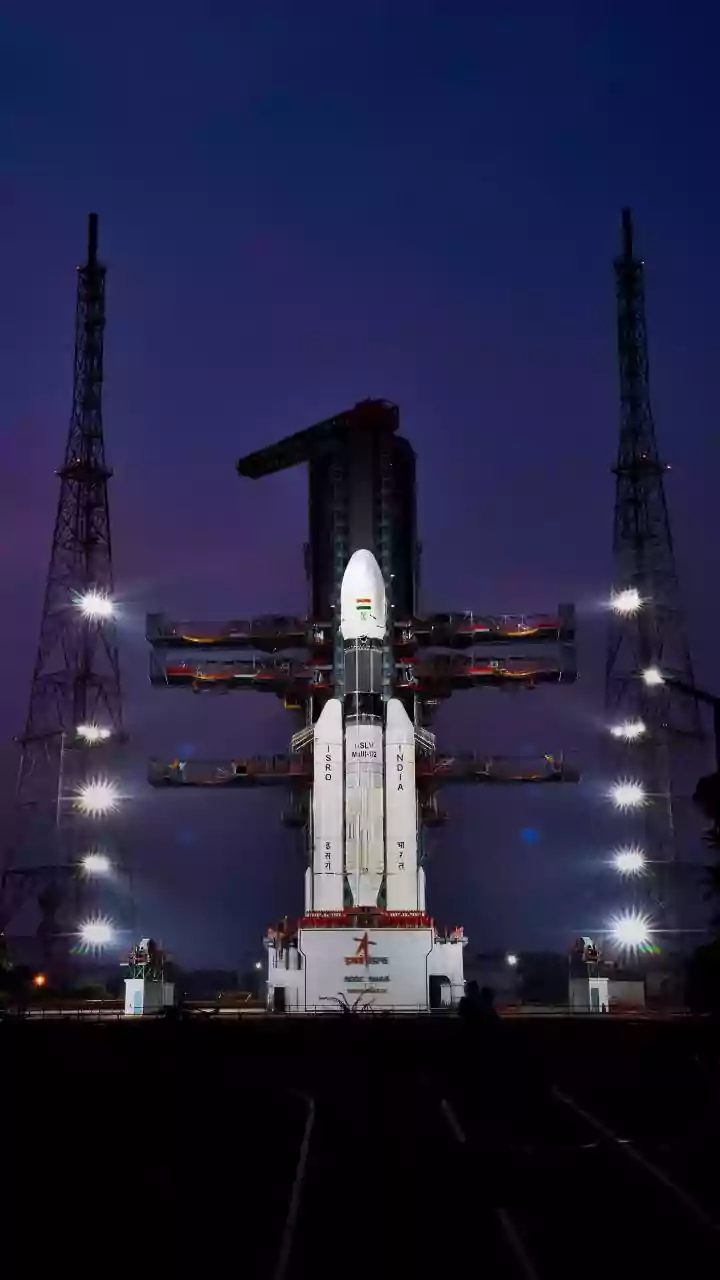
The air drop test is part of a series of rigorous demonstrations to prove the reliability of every component. Before this, ISRO has meticulously tested numerous other systems. The Crew Escape System (CES), for example, is designed to whisk the crew module away from the rocket in case of a launchpad emergency or a mid-flight anomaly. Successful tests of the CES, like the TV-D1 mission in October 2023, have proven its ability to function under extreme conditions. The launch vehicle itself, the LVM3, has been 'human-rated', meaning it has been re-engineered with additional redundancy and safety features to transport astronauts. From the life support systems that provide an Earth-like environment in space to the propulsion modules and recovery procedures, every element is being tested and perfected.
The Road Ahead to Orbit
With this successful test, the Gaganyaan programme moves into its final phase. The next major steps involve a series of uncrewed flights. The first of these, the G1 mission, is planned for later in 2026. This flight will not carry astronauts but will instead have a humanoid robot named 'Vyommitra' on board. Vyommitra will simulate human functions, allowing ISRO to test the life support systems and other mission parameters in a real space environment. This will be followed by at least one more uncrewed mission before ISRO attempts the historic crewed launch. While the timeline has been adjusted due to the complexities of development and pandemic-related delays, the first human spaceflight is currently targeted for 2027.