




Beyond the Six-Pack: Understanding Core Stabilization
When people talk about the “core,” they’re often just thinking about the abdominal muscles—the coveted six-pack. But true core strength is much deeper. Core stability refers to the ability of the intricate network of muscles in your trunk to support your spine
and keep your body stable during movement. [18, 20] This system includes your abs, lower back muscles, glutes, and even your diaphragm and pelvic floor. [7, 18] Strong core stabilization is crucial for good posture, balance, and preventing injury, whether you're lifting groceries, playing sports, or simply walking. [15, 20] It’s not about how many crunches you can do, but how well your body can resist unwanted movement and maintain control. [18]
The Ultimate Core Test: Why Warrior Three Works
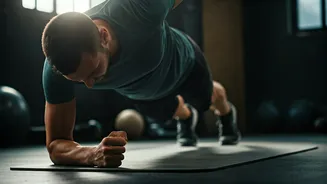
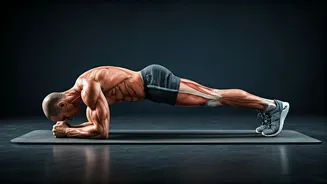
Warrior Three (Virabhadrasana III) is so effective because it puts your core stabilization to the immediate test. [1, 6] By balancing on one leg and extending your body into a horizontal line, you create a long lever that your core must work hard to support. [8, 17] The pose requires the deep muscles of your abdomen and back to fire in coordination to keep your torso from sagging and your hips from tilting. [1, 14] Unlike static exercises like planks, Warrior Three is a dynamic posture that challenges your balance, proprioception (your body's awareness in space), and full-body strength simultaneously. [1, 8] If your hips open to the side, your chest collapses, or your back rounds, it’s a clear sign that your core stabilizers aren't fully engaged. [1, 3] This makes the pose a powerful diagnostic tool, instantly revealing weaknesses that other exercises might miss. [6, 8]
How to Practice Warrior Three (Virabhadrasana III)
Start by standing in Mountain Pose (Tadasana) or from a High Lunge. Shift your weight onto your right foot. As you inhale, begin to hinge forward from your hips, simultaneously lifting your left leg straight behind you. [1, 13] The goal is to create a straight line from the crown of your head to your left heel, forming a “T” shape with your body. [1] Keep your standing leg strong but with a micro-bend in the knee to avoid locking the joint. [1, 12] Draw your abdominal muscles in and up to support your lower back. [1, 10] Your arms can extend forward, out to the sides like airplane wings, or be held at your heart for more stability. [1, 6] Fix your gaze (drishti) on a non-moving spot on the floor a few feet in front of you to help with balance. [1, 4] Hold for several breaths before mindfully returning to your starting position and repeating on the other side. [13]
Avoid These Common Warrior Three Mistakes
Perfecting Warrior Three is a journey, and avoiding common alignment pitfalls is key to building strength safely. The most frequent mistake is opening the hip of the lifted leg, which breaks the stable line of the pelvis. [3, 4] To fix this, actively rotate your lifted thigh inward and point the toes of your lifted foot directly down at the floor. [1, 4] Another common issue is collapsing the chest or rounding the lower back. [1, 5] Counter this by engaging your back muscles, squeezing your shoulder blades together, and lengthening through your spine. [4] Also, be mindful not to lock your standing knee; a soft bend protects the joint and helps with balance. [1] Finally, don't forget to breathe! Holding your breath creates tension and makes balancing much harder. [1]
Modifications to Build Your Strength
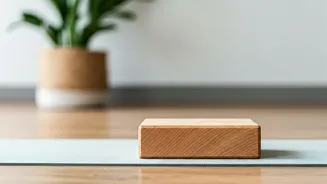
The full expression of Warrior Three is challenging, but a variety of modifications make it accessible for all levels. If you're new to the pose, start by using a wall or a chair for support. You can place your hands on a chair back or a wall in front of you to work on your alignment without the full balance challenge. [1, 9] Another option is to place yoga blocks under your hands for support. [1, 11] You can also keep your lifted leg lower until you build more strength in your standing leg and core. [1] Don't worry about achieving the perfect “T” shape right away. Even practicing with hands on your hips or in a prayer position at your chest can help you focus on the foundational work of stabilizing your hips and engaging your core. [1, 6]