






Understanding the 'Golden Ratio'
In the coffee world, the key to a balanced brew is often called the 'golden ratio'. This refers to the ideal proportion of coffee grounds to water, measured by weight. While the perfect cup is subjective, coffee professionals and the Specialty Coffee
Association (SCA) provide a reliable starting point: a ratio between 1:15 and 1:18. This means for every 1 gram of coffee, you should use between 15 and 18 grams (or millilitres) of water. A ratio of 1:16 is widely considered an excellent, middle-of-the-road starting point for most drip and pour-over methods. A lower number, like 1:15, will produce a stronger, more concentrated brew, while a higher number, like 1:18, will result in a lighter, more delicate cup.
The Science of Good Extraction
So, why does this ratio matter so much? It all comes down to extraction, which is the process of water dissolving the hundreds of flavour compounds locked inside your coffee grounds. When you brew coffee, these compounds extract in a specific order. Fruity and acidic notes come out first, followed by sweeter, deeper flavours. If you stop the process too soon (under-extraction), your coffee will taste sour and thin because you've only pulled out those initial acids. If you let it go for too long or use too much water for your dose of coffee (over-extraction), you start to pull out the harsher, bitter compounds that dissolve last, resulting in an unpleasant, hollow taste. The golden ratio provides the right amount of water to extract the sweet spot of flavours without veering into sour or bitter territory.
How to Measure for Consistency
The most reliable way to nail your coffee-to-water ratio is by using a simple kitchen scale. Measuring by weight in grams removes all the guesswork caused by differences in bean density, roast level, and grind size. A scoop of dark roast can weigh significantly less than the same scoop of a light roast. To start with a 1:16 ratio for a standard 12-ounce mug (about 350ml of water), you would need approximately 22 grams of coffee (350 divided by 16). If you don't have a scale, you can get a reasonable approximation using measuring spoons. A level tablespoon of medium-ground coffee weighs about 5-6 grams. So for that same 350ml mug, you'd use about four level tablespoons of grounds. Remember that a 'cup' on a coffee maker is often only 5 or 6 ounces, not the standard 8-ounce measuring cup, which is why many pots brewed by 'scoops per cup' taste weak.
Adjusting for Your Brew Method
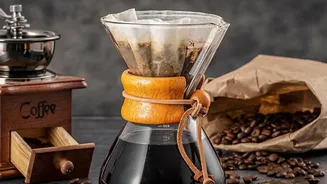
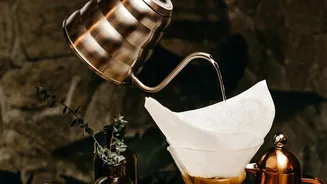
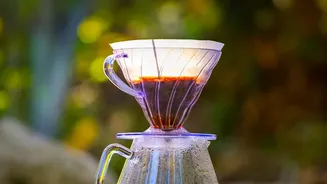
The 1:16 ratio is a fantastic baseline, but different brewing methods can benefit from slight adjustments. Full immersion methods like a French press, where the grounds steep in water for the entire brew time, often taste better with a slightly stronger ratio, such as 1:14 or 1:15, to create a bolder, full-bodied cup. Pour-over methods like a V60 or Chemex work beautifully in the 1:15 to 1:17 range, allowing you to highlight brightness and clarity. Standard automatic drip coffee makers also fall squarely in this 1:16 to 1:17 range. Espresso is its own category entirely, using a much more concentrated ratio of around 1:2 (e.g., 18 grams of coffee to produce a 36-gram liquid shot).
Fine-Tuning to Find Your Perfect Cup
Think of the golden ratio as your starting point, not an unbreakable rule. The ultimate goal is to brew coffee that you enjoy. Once you start with a consistent ratio, you can make small, deliberate changes to dial in the flavour. If your coffee tastes balanced but a little too weak for your liking, adjust the ratio to be stronger—for example, from 1:17 to 1:16. If it's balanced but a bit too intense, make it weaker by moving from 1:15 to 1:16. If the flavour itself is off—sour or bitter—it's better to first adjust your grind size (finer for sour, coarser for bitter) or brew time before changing your ratio. Keep your ratio constant while you fix the extraction, then adjust the strength to your preference. This methodical approach is the fastest way to master your morning brew.