




The Black-and-White Problem
For decades, the Microsoft Word resume has been the default currency of the job market. It's familiar, easy to create, and universally accepted. But its greatest strength—simplicity—has become its biggest weakness. A Word document, by its very nature,
is a flat, one-dimensional summary of your career. It reduces your complex projects, creative solutions, and hard-won skills into a series of bullet points. Recruiters, who spend mere seconds scanning each application, are left with a text-only snapshot that often fails to distinguish one qualified candidate from another. This format is particularly limiting for professionals in creative, tech, and project-based fields, where the work itself speaks louder than any description of it.
Navigating the Robot Gatekeepers
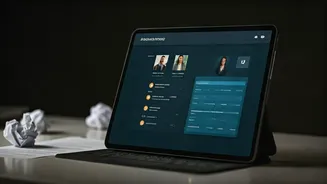
Before a human even sees your resume, it likely has to pass through an Applicant Tracking System (ATS). These software gatekeepers scan documents for keywords and specific formatting. The irony is that the very tool used to create resumes, MS Word, can be a minefield for ATS compatibility. Intricate formatting, columns, tables, and even certain fonts can confuse the software, leading to your resume being misinterpreted or discarded before it ever reaches a hiring manager. While plain-text versions are safer, they strip away any semblance of personality or design, further commoditising your professional identity. You’re forced to choose between a document designed for a human or a machine, and you can rarely satisfy both with a single .docx file.
Enter the Dynamic Digital Portfolio
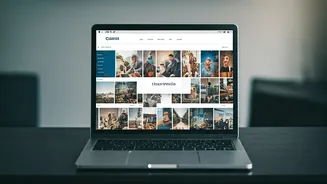
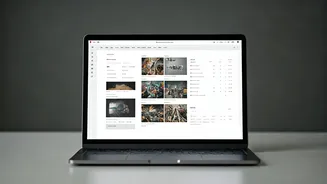
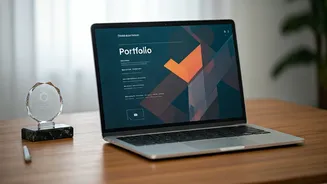
This is where the public digital portfolio changes the game. It is not just a resume uploaded online; it’s a living, breathing showcase of your professional self. A digital portfolio is a curated collection of your best work, hosted on a personal website, a specialised platform like Behance (for designers) or GitHub (for developers), or even a well-structured profile on Contently (for writers). Instead of merely stating that you “led a successful marketing campaign,” you can link directly to the campaign’s landing page, show the analytics dashboard, and embed a video of the final ad. You move from telling to showing.
Show, Don’t Just Tell
The single greatest advantage of a portfolio is its ability to provide tangible proof of your skills. A software developer can link to their GitHub repository, allowing recruiters to see their clean, efficient code. A graphic designer can display high-resolution images of their branding work. A writer can present a clean, readable collection of their published articles. This immediately elevates your application. It answers the recruiter’s unspoken questions: Can this person actually do the job? What is the quality of their work? A portfolio provides those answers in a rich, multimedia format that a Word document simply cannot match.
Build Your Professional Brand
A resume documents your past jobs. A portfolio builds your future brand. It gives you a space to control your own narrative, inject personality, and demonstrate your passion for your field. You can include a thoughtful bio, write blog posts about industry trends, or display testimonials from previous clients or managers. This transforms you from a list of job duties into a thoughtful, engaged professional. In a competitive market like India's, where thousands may apply for a single tech or creative role, a compelling personal brand presented through a portfolio link is a powerful differentiator. It shows you’re not just looking for a job; you’re building a career.
Getting Started is Simple
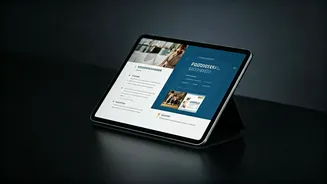
The idea of building a “digital portfolio” might sound intimidating, but it doesn't have to be. Start small. A simple link aggregator like Linktree or a one-page website builder like Carrd can be set up in an hour. Use it to create a clean landing page with your name, a professional photo, a short bio, and links to your three best projects. Even a meticulously curated LinkedIn profile, with rich media added to your experience section, can function as a basic portfolio. The goal is to have a single, professional URL that you can put at the top of your traditional resume—and in your email signature and social media profiles—that invites people to see the real work behind the bullet points.