






Quantity vs. Quality in Every Step
The 10,000-steps-a-day target has become a global phenomenon, a simple benchmark for an active day. While achieving this number is certainly beneficial, recent studies are highlighting that the intensity of your steps can significantly amplify the health
rewards. Think of it as the difference between a leisurely stroll and a walk with purpose. Studies have shown that while a higher step count is linked to lower risks of dementia, cancer, and cardiovascular disease, adding speed into the mix provides benefits 'above and beyond' the total number of steps. In fact, some research suggests that a shorter, faster walk can offer comparable mortality risk reduction to a longer, slower one, which is great news for those who are short on time. This shifts the conversation from just 'how much?' to 'how well?' we walk.
What Exactly Is a Brisk Walk?
The term 'brisk' is relative, but there are clear, science-backed definitions. Generally, a brisk walk is considered a moderate-intensity exercise. Most health organisations define it as a pace of at least 3 miles per hour (or about 4.8 kilometres per hour). A more practical measure is cadence, or steps per minute. The widely accepted minimum for a brisk walk is 100 steps per minute. For context, a casual stroll is typically around 80 steps per minute. A simple, low-tech way to gauge your pace is the 'talk test': during a brisk walk, you should be able to hold a conversation but not have enough breath to sing a song. If you can belt out your favourite tune, it's time to pick up the pace. If you're too breathless to speak in short sentences, you're likely in vigorous territory and can ease up slightly.
The Powerful Health Perks of Pace
Walking faster engages your cardiovascular system more effectively, leading to a host of significant health benefits. Studies have linked brisk walking to a longer life expectancy, with one suggesting it could add up to 20 years compared to slow walkers. A faster pace is associated with a substantially lower risk of developing cardiovascular disease, certain cancers, and dementia. For example, one major study found that older adults who walked at an average pace reduced their cardiovascular risk by 46 percent, while fast walkers reduced it by an impressive 53 percent. Beyond disease prevention, brisk walking is effective for strengthening bones, which helps reduce the risk of hip fractures, and it can help prevent the age-related loss of muscle mass. It also boosts your mood, improves sleep quality, and strengthens immune cells that fight off illness.
How to Increase Your Walking Speed
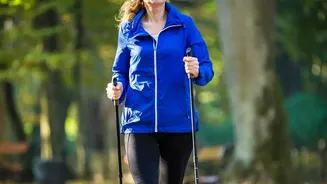
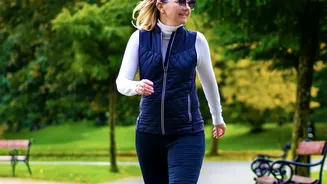
Improving your walking pace doesn't mean breaking into a run. It’s about making small, intentional adjustments. Start with your posture: stand tall, keep your eyes on the horizon, and engage your core. Use your arms to help propel you forward by bending your elbows at a 90-degree angle and swinging them from the shoulder, not the elbow. Focus on taking quicker, shorter steps rather than overstriding, which can actually slow you down and strain your back. Pushing off forcefully through your toes at the end of each step can also add power and speed. To make it more engaging, try interval training: alternate between a minute of brisk walking and two minutes of a more moderate pace. Listening to music with a tempo of around 100-120 beats per minute can also naturally help you pick up your pace.