



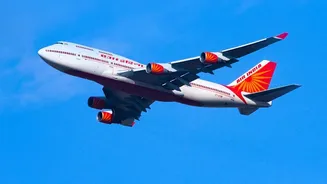


The Headline: A Significant Loss
According to financial disclosures from Singapore Airlines (SIA), which holds a 25.1% stake in the Indian carrier, Air India is estimated to have incurred a loss of around ₹10,500 crore in the first half of FY27 (April to September 2026). While this is a substantial
figure, it represents an improvement from the approximately ₹12,500 crore loss recorded in the same period a year prior. The disclosure came as part of SIA's own financial reporting, where it accounts for its share of Air India's performance. For the half-year, SIA's share of Air India's loss was reported at S$361.7 million (around ₹2,640 crore), a 16% decrease from the previous year. This highlights that while still in the red, Air India is narrowing its losses as it continues its large-scale transformation under the Tata Group.
Explaining 'Carrying Value'
The confusion for many comes from the term 'carrying value' or 'carrying amount'. In accounting, this is essentially the value of an asset as recorded on a company's balance sheet. It starts with the original cost of the asset and is then adjusted over time for things like depreciation (for tangible assets like machinery) or impairment. An impairment loss is a write-down that occurs when an asset's market value or its ability to generate cash falls significantly and is not expected to recover. So, when reports mention a lower carrying value for SIA's stake in Air India, it's not a direct cash loss. Instead, it's an accounting adjustment reflecting a re-evaluation of the investment's worth on the books.
The Vistara Merger Context
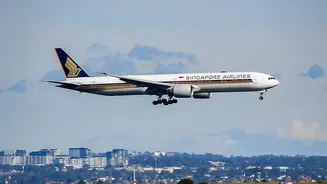
To understand this stake, we have to go back to the merger of Vistara with Air India, which was completed on November 12, 2024. Vistara was a joint venture between Tata Sons (51%) and Singapore Airlines (49%). As part of the merger agreement to create a single, larger full-service carrier, Singapore Airlines invested further and acquired a 25.1% stake in the newly enlarged Air India Group. This move was strategic for both parties, giving Air India greater scale and allowing SIA to deepen its participation in the fast-growing Indian aviation market. After the merger, SIA's investment in Vistara was converted into this stake in Air India, which is now carried as an asset on SIA's balance sheet.
Why the Value was Adjusted
The headline of the original article is slightly misleading. The adjustment is on Singapore Airlines' books regarding the value of its investment in Air India, not the other way around. Due to Air India's continued, albeit narrowing, losses, the value of SIA's investment has been re-assessed. Singapore Airlines' financial report showed the carrying value of its investment in Air India fell by 29.5%, from S$1.13 billion on March 31, 2026, to S$799.9 million by the end of September 2026. This S$334.7 million reduction is an impairment charge. It reflects the fact that Air India is still working through its costly transformation and is not yet profitable. This accounting measure is required to ensure the value of the asset on SIA's books accurately reflects its current estimated worth.
A Paper Loss, Not a Cash Loss
It is crucial to distinguish between an accounting loss and an operational, or cash, loss. The write-down of the carrying value is a non-cash charge. No money actually left Singapore Airlines' bank account because of this adjustment. It is an accountant's way of saying, 'Based on its current performance, our stake in this other company is worth less on paper than we previously recorded'. While it impacts the reported net profit of the investing company (SIA in this case), it doesn't affect its cash flow from operations. Air India's actual challenge remains its operational performance—the revenue from selling tickets versus the high costs of fuel, staff, and aircraft maintenance. Singapore Airlines noted that rising jet fuel prices have been a major factor driving up costs for the entire industry.
The Bigger Picture for Air India
Despite the paper loss, Singapore Airlines has publicly stated that Air India has made 'tangible progress' in its multi-year transformation and that a turnaround of this scale takes time. Both SIA and Tata continue to support the airline's path toward growth and efficiency. The focus for Air India, under its new CEO Tewolde Gebremariam, remains on achieving sustainable profitability. This involves a massive overhaul of its fleet, IT systems, and service standards, all of which are capital-intensive. The reported loss, while large, was expected as part of this transformation journey. The fact that the loss has narrowed year-over-year is seen as a positive sign that the airline is moving in the right direction, even if the path to profitability is still long.