








The Pacific's Powerful Pulse: ENSO
At the heart of this connection is a natural climate pattern called the El Niño-Southern Oscillation, or ENSO. This cycle involves a periodic warming (El Niño) or cooling (La Niña) of the sea surface temperatures in the central and eastern tropical Pacific
Ocean. These temperature shifts, which occur every two to seven years, are strong enough to disrupt atmospheric circulation and weather patterns across the globe, a phenomenon scientists call a 'teleconnection'. Under normal conditions, trade winds blow from east to west, piling up warm water in the western Pacific, near Asia. But when these winds weaken, the cycle can flip, triggering either an El Niño or La Niña event.
El Niño’s Impact: A Weaker Monsoon
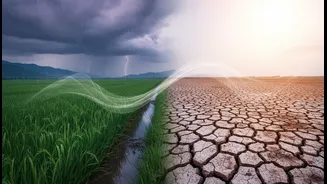
For India, an El Niño phase is often bad news. When the central and eastern Pacific warms up, it alters the typical atmospheric pressure patterns. This change weakens the crucial east-to-west trade winds that are connected to the moisture-laden winds that drive India's southwest monsoon. This disruption generally suppresses monsoon rainfall, especially across northwest and central India. Historically, many of India's most severe droughts have coincided with strong El Niño years. While not every El Niño causes a drought, a strong event significantly increases the probability of below-average rainfall, which can have devastating consequences.
La Niña: The Other Side of the Coin
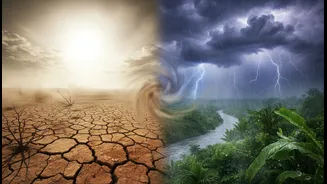
La Niña is the cooler counterpart to El Niño, where sea surface temperatures in the eastern Pacific drop below average. This phase has roughly the opposite effect on India's weather. The cooling in the Pacific tends to reinforce the normal atmospheric patterns, leading to stronger trade winds. This can result in an enhanced southwest monsoon, bringing above-average rainfall to the subcontinent. While beneficial for agriculture and water reservoirs, very strong La Niña events can also lead to intense rainfall and flooding in some regions.
The Ripple Effect on India's Economy
The monsoon's performance is deeply intertwined with India's economic health. The agricultural sector, which employs nearly half the country's workforce, is heavily dependent on these seasonal rains. A weak monsoon triggered by El Niño can lead to lower crop yields, particularly for staples like rice, cotton, and soybeans. This not only reduces rural incomes and dampens demand for goods and services but also puts upward pressure on food prices, fueling inflation across the economy. While structural reforms have made the economy more resilient, a severe rainfall deficit can still shave valuable points off India's GDP growth.
Beyond the Monsoon: Heatwaves and Cyclones
The influence of a warming Pacific extends beyond just the monsoon. The additional heat transferred from the ocean into the atmosphere during an El Niño year can contribute to higher global average temperatures, increasing the frequency and intensity of heatwaves in parts of India. Ocean warming is also changing cyclone patterns. Warmer sea surface temperatures provide more energy for storms, potentially leading to the rapid intensification of cyclones in the Indian Ocean basin. These shifts in extreme weather events pose significant risks to coastal communities, infrastructure, and marine ecosystems, which are already under stress from climate change.