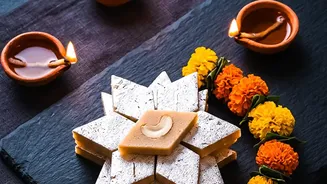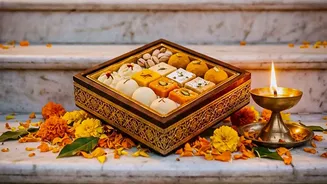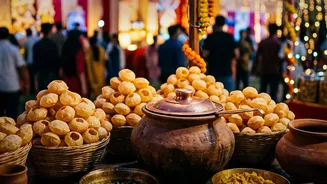




Diwali is synonymous with joy, light, and a delightful array of sweets. But celebrating doesn't have to mean sidelining your health goals. Embrace the festive spirit with these simple swaps in familiar sweet recipes for a healthier indulgence.
Rethink Your Sweetener
Refined
white sugar is often the first ingredient we reach for, but traditional Indian kitchens offer a wealth of healthier alternatives. Jaggery (gur) is a fantastic substitute, bringing a deep, caramel-like flavour and retaining minerals like iron and calcium. While it's a popular choice for its flavour, it is still a concentrated sugar, so moderation is key. For a truly whole-food approach, consider using date paste. Dates are naturally sweet and packed with fibre, vitamins, and minerals. You can easily make a paste by soaking pitted dates in warm water and blending them until smooth. This paste works beautifully in laddoos, barfis, and kheers, acting as both a sweetener and a binder.
Choose Your Fats Wisely
Ghee is a cornerstone of Indian festive cooking, loved for its nutty aroma. While good-quality ghee in moderation has its place, you can make strategic swaps in certain recipes. For vegan sweets or a different nutrient profile, refined coconut oil is an excellent 1:1 substitute, especially in dishes where you want a neutral flavour. For halwas and some laddoos, you can also incorporate nut butters like almond or cashew butter to provide richness, healthy fats, and a creamy texture. In some preparations, you can reduce the overall amount of fat by incorporating ingredients that provide their own moisture and richness, such as nuts, seeds, and coconut.
Go with Whole Grains
Many traditional sweets use refined all-purpose flour (maida). An easy and effective swap is to use whole wheat flour (atta), which adds fibre and a nutty flavour. It's a great choice for atta laddoos, panjiri, and thekua. Don't stop there; the world of millets offers incredible possibilities. Ragi (finger millet) flour can be used to make delicious and calcium-rich halwas or laddoos. You can also make kheer with millet flakes or broken wheat (dalia) instead of white rice for a more nutrient-dense dessert. These swaps not only boost the fibre content but also introduce a more complex, rustic taste to your sweets.
Let Fruits and Nuts Shine
Instead of relying solely on sugar for sweetness and flour for bulk, let the natural goodness of fruits and nuts take centre stage. Dry fruit laddoos, made from a blend of dates, figs, almonds, walnuts, and pistachios, require no added sugar at all. The dates act as a natural binder, holding everything together. Similarly, you can create a simple but elegant barfi using just dates and nuts. These sweets are not only delicious but also packed with energy, healthy fats, and fibre, making for a truly guiltfree indulgence.
Bake, Don’t Fry
The cooking method can transform a heavy snack into a much lighter treat. Many beloved Diwali snacks that are traditionally deep fried can be baked or air fried with excellent results. Gujiyas, for instance, can be filled with their classic khoya nut mixture, sealed, brushed with a little ghee, and baked until golden and crisp. The same applies to mathri, shankarpali, and chakli. Baking not only reduces the oil content significantly but also makes for easier cleanup and allows you to prepare larger batches at once. You get the same satisfying crunch without the extra grease.