




ISRO's New Role in a Crowded Field
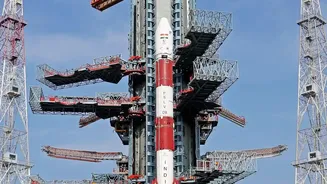
For over fifty years, the Indian Space Research Organisation (ISRO) has been the sole custodian of India's space ambitions, achieving remarkable feats like the Chandrayaan-3 lunar landing and the Mars Orbiter Mission on a shoestring budget. But the global
space economy is changing. The future isn't just about national pride; it's about commerce. With reforms initiated in 2020 and codified in the Indian Space Policy 2023, the government has set a new course. The goal is to allow ISRO to focus on what it does best: advanced research, deep-space exploration, and national security missions. This frees up the routine, but commercially vital, work of building and launching satellites for a new generation of private players. This strategic shift doesn't diminish ISRO's role but evolves it into that of a mentor and enabler for a much larger industry.
Meet the New Astronauts of Industry
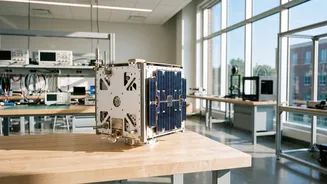
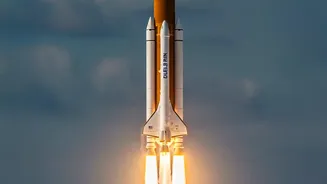
A new galaxy of startups is emerging, ready to take on the challenge. Companies like Skyroot Aerospace and Agnikul Cosmos are the flag-bearers of this change. Skyroot made history by becoming the first Indian private company to launch a rocket into orbit with its Vikram-1 mission. Agnikul has pioneered 3D-printed rocket engines and established India's first private launchpad. These are not just component suppliers; they are building end-to-end launch capabilities. Beyond rockets, companies like Pixxel are developing constellations of hyperspectral imaging satellites for earth observation, while Dhruva Space is focused on small satellite manufacturing. The number of registered space startups has surged from just one in 2014 to around 440 by August 2026, signalling a vibrant and growing ecosystem.
The Ground Control: IN-SPACe and NSIL
To manage this new public-private partnership, the government has created two key bodies. The Indian National Space Promotion and Authorisation Centre (IN-SPACe), established in 2020, acts as a single-window regulator and promoter. It's the agency that authorises private space activities, from launches to satellite operations, and provides access to ISRO's extensive facilities. Think of it as the traffic controller of the space sector. Meanwhile, NewSpace India Limited (NSIL) operates as ISRO's commercial arm. NSIL's job is to transfer mature ISRO technologies to the private sector and procure launch services and satellites from them, effectively becoming a key customer and market-maker for these new companies. This structure is designed to change ISRO's approach from a 'supply-based model' to a 'demand-based model', driven by market needs.
The Economic Lift-Off
The economic potential is immense. India's space economy, currently valued at around $8-9 billion, is projected to soar to between $40 billion and $44 billion by the next decade. This growth is being fuelled by a surge in private investment, which climbed from about $100 million in 2021-22 to over $600 million by March 2026. Commercial launches are expected to drive down costs, increase the frequency of launches, and spur innovation in areas like reusable rockets. This creates a ripple effect, boosting job creation in high-skilled fields like aerospace engineering and data analytics, and driving growth in ancillary sectors like manufacturing and materials science. A liberalised FDI policy, allowing up to 100% foreign investment in some areas, is set to attract even more global capital.
Navigating the Challenges Ahead
The path forward is not without its obstacles. Indian space startups face intense competition from established global players like SpaceX and Rocket Lab. Funding, while growing, is still a fraction of the multi-billion dollar investments seen in the US. There is also a need for more infrastructure, such as additional launch pads and testing facilities, to support the rising demand. Key challenges include developing a pool of experienced talent in highly specialised fields, ensuring a robust regulatory framework for issues like liability and space debris, and achieving self-reliance in critical technologies like space-grade semiconductors. Successfully navigating these hurdles will be crucial for the sector to transform its potential into sustainable, long-term success.