







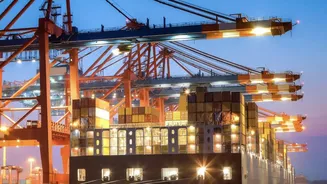

A Landmark Agreement Now in Effect
After years of negotiations that began in 2010, the India-New Zealand Free Trade Agreement (FTA) officially came into force on October 20, 2026. This is a significant moment, marking a comprehensive economic partnership designed to boost bilateral trade,
which currently stands at a modest level but holds immense potential. Under the terms, New Zealand will grant 100% duty-free access to all Indian exports from day one—a first for any Indian FTA. In return, India will open up about 70% of its product lines to New Zealand's exports. The agreement is more than just tariff reduction; it's a framework for deeper cooperation, including a commitment from New Zealand to promote USD 20 billion in investment into India.
Unlocking the Digital Corridor for Tech
For India's powerhouse technology sector, the FTA presents a multi-pronged opportunity. New Zealand is a mature digital economy, and this agreement aims to build a stronger bridge between the two nations. A key provision is the creation of new visa pathways for up to 5,000 skilled Indian professionals at any one time, allowing specialists in IT, engineering, and healthcare to work in New Zealand for up to three years. This mobility is crucial for Indian IT service firms executing projects and managing clients in the region. Furthermore, the deal facilitates trade in services, which can help Indian software, fintech, and other digital enterprises find a new market for their innovations, which were previously under-represented in bilateral trade.
A Boost for Startups and Students
The agreement also provides specific benefits for the next generation of professionals and entrepreneurs. Indian students pursuing higher education in New Zealand will see expanded post-study work rights, with PhD graduates eligible for work visas up to four years. This helps create a talent pipeline that can benefit both economies. For startups, particularly in the tech and electronics space, the immediate elimination of tariffs makes exporting goods to New Zealand more viable. The FTA is seen as a way to help smaller enterprises and MSMEs participate in global trade by reducing the cost and complexity of entering a new, developed market.
New Horizons for Indian Agriculture
India's diverse agricultural sector also stands to gain significantly. The complete removal of import duties by New Zealand makes Indian agricultural products more price-competitive. Sectors expected to benefit include textiles and apparel (which faced tariffs up to 10%), spices, cereals, marine products, and various processed foods. While India successfully protected its highly sensitive dairy and certain other farm sectors from tariff reductions, the agreement opens the door for many of its key agri-exports. It creates a clear path for farmers and food producers to access a high-value market that previously had barriers to entry.
Cooperation and Future Growth
Beyond immediate tariff cuts, the agreement establishes a framework for long-term cooperation. A notable feature is the 'Agricultural Productivity Partnership,' which will focus on sharing knowledge and establishing Centres of Excellence for products like apples and kiwifruit. This aims to improve farm incomes and productivity in India. The two nations have also agreed to the electronic exchange of trade data to streamline customs and reduce friction for businesses. While the full economic impact will unfold over time, both countries have set an ambitious target of doubling bilateral trade by 2030, transforming this agreement from a document into a driver of tangible growth and opportunity.