



Understanding Purity: Karat and Fineness
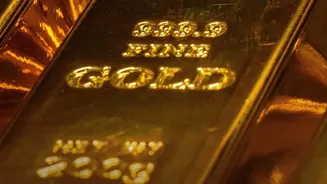
The first step in buying gold is understanding its purity, measured in karats (K). 24K gold is the purest form (99.9% pure) but is too soft for intricate jewellery. That's why it's mixed with alloys like copper or silver for strength. Most Indian gold jewellery is made
from 22K gold, which means it contains 91.6% pure gold. This is often stamped on the jewellery with the number '916'. You might also find 18K (75% pure, or '750') and 14K (58.5% pure, or '585') gold, which are more durable and less expensive, often used for studded pieces. The higher the karat, the higher the price per gram.
The Hallmark of Trust: BIS and HUID
To protect consumers, the Bureau of Indian Standards (BIS) has made hallmarking mandatory for gold jewellery sold in India. A BIS hallmark certifies that the gold's purity has been verified at a licensed lab. Since 2023, the hallmark consists of three marks: the triangular BIS logo, the purity grade (e.g., 22K916), and a six-digit alphanumeric Hallmark Unique Identification (HUID) number. This HUID is crucial; you can use it to verify the item's details on the BIS CARE app, confirming its authenticity independently of the jeweller. Always insist on HUID-hallmarked jewellery for any new purchase as it provides a clear chain of accountability.
Decoding the Daily Gold Rate
Jewellers display daily gold rates, but the rate you see is not the final price. This rate is for the raw gold metal itself and typically varies between 24K and 22K purity. The price of 22K gold is calculated based on the 24K rate; for instance, if the 24K rate is ₹7,000 per gram, the 22K rate would be approximately ₹6,412 (₹7,000 x 0.916). Remember that this is just the base cost of the gold in your jewellery. The final bill will include additional costs like making charges and GST.
The Most Important Factor: Making Charges
Making charges, or labour charges, are the costs of turning raw gold into a finished piece of jewellery. This is where prices can vary significantly between jewellers. These charges can be a fixed rate per gram of gold or a percentage of the gold's value, typically ranging from 8% to over 25%. Intricate, handcrafted designs will have higher making charges than simple, machine-made items. Some jewellers also mention 'wastage,' which is the gold lost during the manufacturing process, and may include this in the making charge. Crucially, making charges are often negotiable, especially at independent jewellery stores or during festival seasons. Don't hesitate to ask for a discount on this component.
Calculating the Final Bill
Your final invoice is a sum of several parts. It starts with the value of the gold (weight in grams × gold rate for that purity). To this, the jeweller adds the making charges. Finally, a Goods and Services Tax (GST) is applied. A 3% GST is levied on the total value of the gold plus the making charges. So, the formula is: [ (Gold Weight x Gold Rate) + Making Charges ] + 3% GST. For example, for a 10-gram 22K chain where the gold value is ₹64,120 and making charges are 10% (₹6,412), the subtotal is ₹70,532. The final price after adding 3% GST (₹2,116) would be ₹72,648.