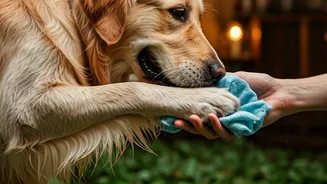






Paw Care is Paramount
Your dog's paws are their first point of contact with damp, muddy streets, which are breeding grounds for germs and fungi. A non-negotiable part of your monsoon routine must be cleaning their paws after every single walk. Use a bowl of lukewarm water,
adding a few drops of a vet-approved antiseptic liquid if needed. Gently wash each paw, making sure to clean between the pads where moisture and dirt get trapped. The most critical step, however, is drying. Use a soft, absorbent towel and dry their paws and the area between their toes thoroughly. Lingering dampness can quickly lead to painful fungal infections. Use this daily ritual to inspect for any cuts, redness, or signs of irritation.
Rethink Your Walking Schedule
While skipping walks isn't an option, adapting your schedule is. Try to time your walks to avoid the heaviest downpours. Shorter, more frequent walks are often better than one long one where your dog is likely to get drenched. Invest in a good quality, comfortable raincoat for your dog to keep their torso dry and reduce the post-walk cleanup. Steer clear of stagnant puddles and waterlogged parks. These areas can harbour dangerous bacteria, including those that cause leptospirosis, as well as parasites. Stick to cleaner, paved paths whenever possible during the wettest months.
Prioritise Skin and Coat Health
The constant humidity and dampness can wreak havoc on your dog’s skin. A coat that remains damp for too long becomes the perfect environment for bacterial and fungal infections (pyoderma), leading to itching, rashes, and hair loss. Make it a habit to towel-dry your dog thoroughly if they get wet, paying special attention to their underbelly, ears, and tail. A quick blast with a hairdryer on a low, cool setting can also help for long-haired breeds. Regular brushing is also essential. It helps remove dirt and debris, prevents fur from matting (which traps moisture), and improves air circulation to the skin.
Fortify Their Diet and Hydration
A strong immune system is your dog’s best defence against monsoon-related illnesses. Consider adding immunity-boosting foods to their diet after consulting your vet; a small pinch of turmeric or a spoonful of plain dahi can support gut health. Ensure they are eating easily digestible, home-cooked food. It's also vital to provide clean, fresh drinking water at all times. Contaminated water is a major source of stomach infections during this season. If your tap water quality is a concern, offer them boiled and cooled water or filtered water to be safe.
Combat Indoor Boredom
Fewer and shorter walks mean your dog has a lot of pent-up energy. A bored dog is often a destructive dog. Prevent this by introducing indoor enrichment activities into their daily routine. Invest in puzzle toys or snuffle mats that make them work for their treats. Play games like 'find the treat' or have short, fun training sessions to practice commands. Even 15 minutes of focused mental stimulation can be as tiring as a short walk. A good chew toy can also keep them happily occupied when they can't be outdoors.
Manage Thunderstorm Anxiety
The loud claps of thunder and flashes of lightning can be terrifying for many dogs. To manage their anxiety, create a safe, cosy 'den' for them in a quiet corner of the house. This could be their crate covered with a blanket, or a spot under a bed. During a storm, play calming music or white noise to muffle the sounds from outside. It’s important to remain calm yourself, as dogs can pick up on your stress. You can sit with them and offer comfort, but avoid excessive coddling, as this can reinforce the idea that there is something to be afraid of. A long-lasting chew or a stuffed toy can also serve as a welcome distraction.