



Our Celestial Neighbours: When and Where to Look
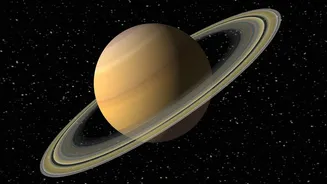
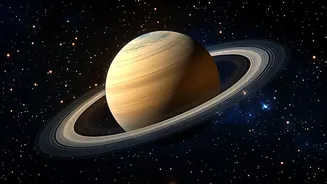
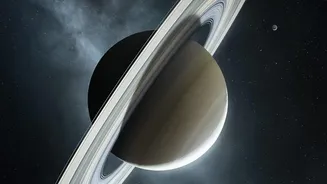
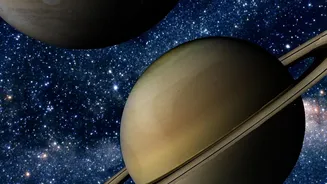
September is a fantastic month for planet-watching. Jupiter and Saturn, the two largest planets in our solar system, are putting on a show in the night sky. Saturn is visible for most of the night, making it an easy target. In late September, you can
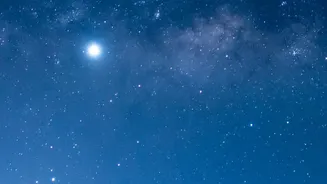
spot the ringed planet near the full Harvest Moon. Jupiter is a brilliant beacon in the pre-dawn sky, rising a few hours before the sun. Don't worry about memorizing exact locations. The beauty of modern technology is that it does the heavy lifting for you. These planets are bright enough to be seen with the naked eye even from a city, appearing as brilliant, steady points of light. A planet typically shines with a more stable light compared to the twinkling of distant stars.
Your Pocket Planetarium: The Best Stargazing Apps
Your smartphone is the most powerful tool in your urban astronomy kit. A host of free and paid applications use your phone's location and sensors to create an augmented reality (AR) map of the sky. You simply point your phone upwards, and the app identifies everything you see. For beginners in India, here are a few excellent, user-friendly choices available on both iOS and Android: SkyView Lite: A very popular free app, it excels at quickly identifying planets, stars, and constellations using your camera. It also has a 'time travel' feature to see the sky on different dates. Star Walk 2: Known for its beautiful design and smooth interface, this app is great for beginners and offers AR overlays even in its free version. Stellarium Mobile: This is a favourite among many astronomers for its realistic sky depiction. The free version is powerful, and it works perfectly without an internet connection, which is great for finding a dark spot away from your Wi-Fi signal. Sky Map: Originally developed by Google, this is a simple, no-frills, open-source app for Android that does one thing well: it shows you what’s in the sky where you're pointing.
How to Use Your Interactive Sky Map
Using these apps is incredibly intuitive. First, download your chosen app and grant it the necessary permissions for location, camera, and motion sensors—this is crucial for the AR feature to work correctly. The app may ask you to calibrate your phone’s compass by moving it in a figure-eight pattern. Once set up, just point your phone towards the sky. The screen will display an overlay of stars, planets, and constellation lines on your camera's view. Use the search function (often a magnifying glass icon) to look for 'Jupiter' or 'Saturn'. The app will then display an arrow on your screen, guiding you to pan your phone until the planet is centred in your view. You can then lower your phone and look in that same direction to spot it with your own eyes.
Tips for the Urban Astronomer
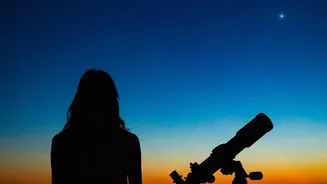
Stargazing from a city comes with the challenge of light pollution, but you can significantly improve your experience with a few tricks. The first step is to get as high up as you can, like on a rooftop, to get above some of the direct street-level glare. Find the darkest corner of your space and turn off any lights you have control over. Crucially, give your eyes at least 20 minutes to adapt to the darkness; you'll be amazed at how many more stars become visible after this adjustment period. Most stargazing apps have a 'night mode' that turns the screen red. Use this feature, as red light is much less damaging to your night vision than bright white or blue light. Finally, check the weather. The best nights for city stargazing are cool, dry, and clear, especially after a rain shower has washed dust and pollutants from the air.
Managing Your Expectations
While you won't see Saturn’s rings or Jupiter’s cloud bands with your naked eye, the experience of identifying these distant worlds is a reward in itself. To your eye, Jupiter will appear as an exceptionally bright, silver-white star that doesn't twinkle. Saturn will be a steady, yellowish-white point of light. The thrill comes from knowing what you are looking at—a giant gas world hundreds of millions of kilometres away. Using a simple pair of binoculars can enhance the view, potentially revealing Jupiter's four largest moons as tiny pinpricks of light huddled close to the planet. For the urban observer, it’s not about seeing Hubble-quality images, but about making a personal connection with the grand scale of the universe.