



The Deluge of Data
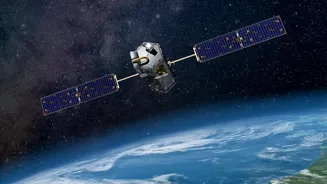
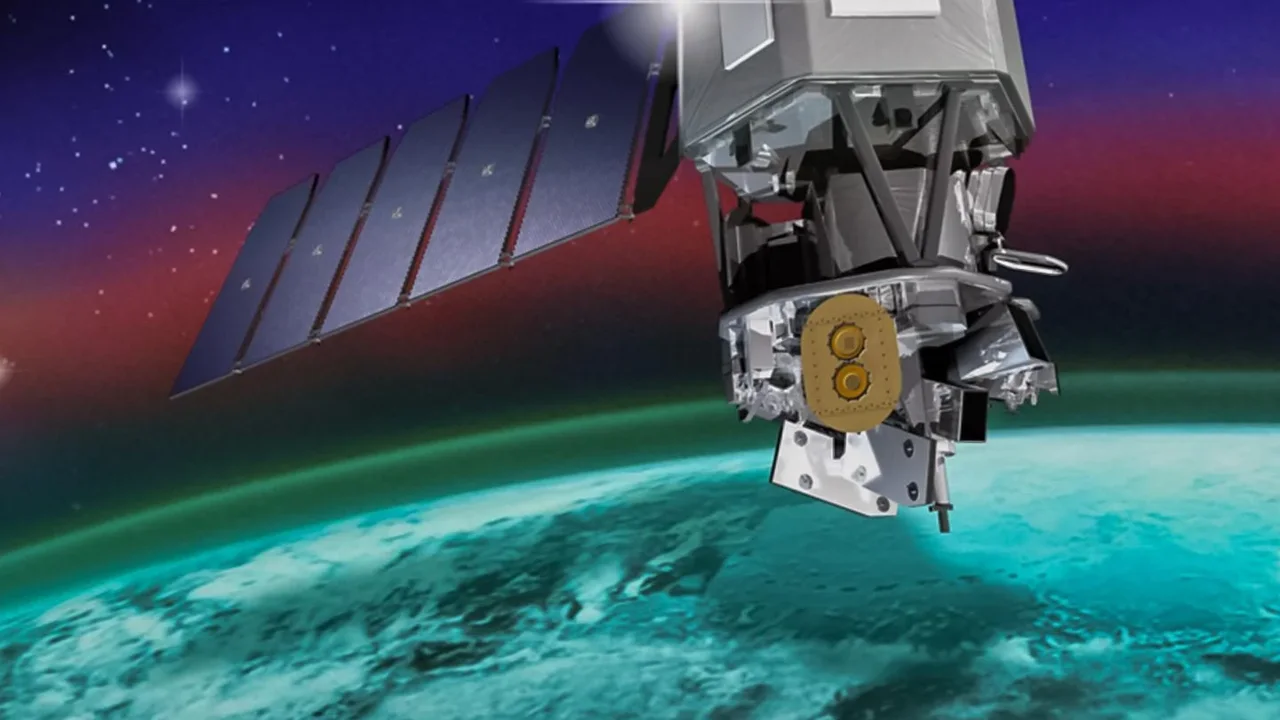
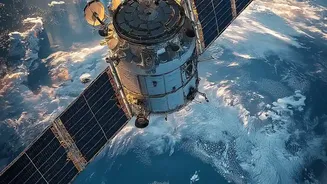
Modern weather forecasting is a battle against a flood of information. Every second, satellites, ground stations, ocean buoys, and weather balloons collect staggering amounts of data about the Earth’s atmosphere. This includes everything from temperature
and pressure to wind speed and humidity. For decades, meteorologists have relied on powerful supercomputers running complex physics-based models to make sense of it all. These traditional methods, known as numerical weather prediction (NWP), are incredibly sophisticated but also incredibly slow and expensive. They solve complex physical equations to simulate the atmosphere, a process that can take hours and require immense computational power. This often creates a bottleneck, limiting the speed and number of forecasts that can be run.
Enter the AI Forecaster
Artificial intelligence, particularly machine learning, offers a completely different approach. Instead of solving physics equations from scratch for every forecast, AI models are trained on decades of historical weather data. By analysing these vast archives, they learn to recognise complex patterns—how a specific set of conditions in the Bay of Bengal, for example, typically leads to cyclone formation days later. Once trained, these AI models can generate a new forecast in minutes or even seconds, a task that would take a supercomputer hours. They are not just faster; they are learning to see new connections in the data that traditional models might miss, effectively becoming a powerful new tool for human experts.
A Sharper Eye on the Monsoon
For India, the most critical weather event is the summer monsoon. The livelihood of millions of farmers and the health of the national economy depend on its timely arrival and distribution. Predicting the monsoon is notoriously difficult, but AI is proving to be a game-changer. In a landmark project, 38 million farmers in India received AI-powered forecasts that predicted the monsoon's onset up to four weeks in advance. The models, including Google's NeuralGCM, correctly identified an unusual dry spell during the season that traditional models missed. This advanced warning allows farmers to make better decisions about when to plant their crops, potentially doubling their annual income and building resilience against an increasingly erratic climate.
Taming the Cyclone
Beyond the monsoon, AI is being deployed to improve the tracking of extreme weather events like cyclones. The India Meteorological Department (IMD) is already using AI-assisted tools, such as the Advanced Dvorak Technique, to better estimate the intensity of developing cyclones. New AI models have shown significant improvements in predicting a cyclone's path up to 96 hours before landfall. This increased lead time is crucial, allowing for more effective evacuation planning and protection of infrastructure, ultimately saving lives. The goal is to shrink the 'cone of uncertainty', giving authorities a more precise area to focus their life-saving efforts. While AI currently excels at predicting a storm's track, work is ongoing to improve its ability to forecast a cyclone's rapid intensification, one of the biggest challenges for forecasters.
A Human-AI Partnership
Experts are clear that AI will not replace human meteorologists. Instead, it will augment their abilities. The most effective approach combines the raw speed and pattern-recognition of AI with the deep physical knowledge and real-world experience of human forecasters. The AI can analyse massive datasets to generate a highly accurate baseline forecast, which human experts then interpret, refine, and contextualise. The IMD is actively working with institutions like the IITs and ISRO to deepen research in this domain, running AI models like GraphCast and FourCastNet experimentally alongside their existing systems. This collaborative approach promises to create a future where forecasts are not only faster but also more reliable and useful for everyone.