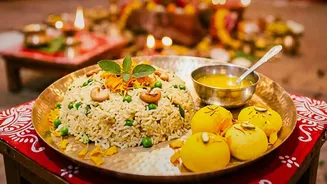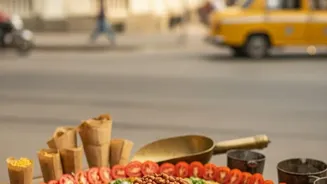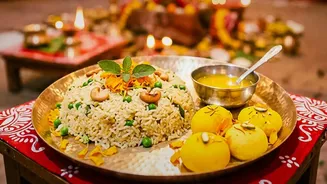


The Tradition of Post-Pujo Visits
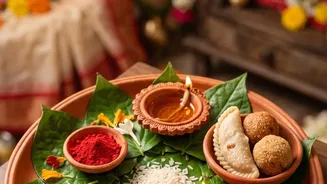
The period following Durga Puja, known as Bijoya, is a time for connection. For Bengalis, this means visiting the homes of relatives and friends to exchange good wishes ('Shubho Bijoya'). While plates of sweets ('mishti') are an indispensable part of this tradition,
the spread is considered incomplete without an array of savoury snacks, or 'nonta', to create a perfect balance of flavours. These snacks are not just food; they are an extension of hospitality, a way to make guests feel welcomed and cherished. Preparing these dishes signifies a household's readiness to receive visitors and continue the festive joy.
Nimki: The Quintessential Crispy Treat
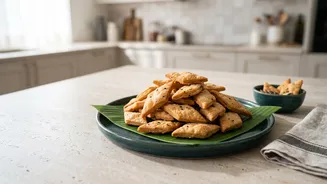
No Bijoya spread is truly complete without Nimki. These small, diamond-shaped, deep-fried crackers are salty, flaky, and incredibly addictive. Made from a simple dough of flour, ghee, salt, and nigella seeds (kalonji), they are fried to golden perfection. Nimkis come in various shapes and sizes, from the tiny 'kucho nimki' to the layered 'parota nimki'. Their beauty lies in their simplicity and long shelf life, making them the perfect snack to prepare in advance for impromptu guest visits. They pair beautifully with a cup of hot tea or can be enjoyed on their own.
Ghugni: The Hearty and Flavourful Staple
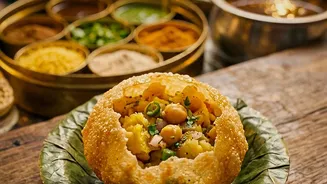
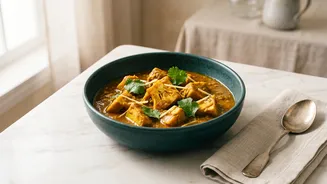
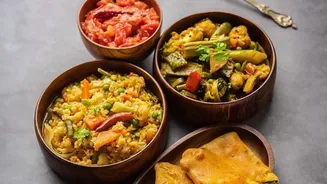
For a more substantial offering, Ghugni is a classic choice. This beloved Bengali dish is a curry made from dried yellow or white peas, slow-cooked with a medley of spices like cumin, coriander, and turmeric, and often garnished with chopped onions, green chillies, and a squeeze of lime. It’s a warm, comforting, and flavourful dish that satisfies a heartier appetite. Served in small bowls, it can be enjoyed by itself or paired with Luchi (fluffy, deep-fried bread). Ghugni is a versatile crowd-pleaser that embodies the comforting and generous spirit of Bengali hospitality.
Chops and Cutlets: The Fried Delights
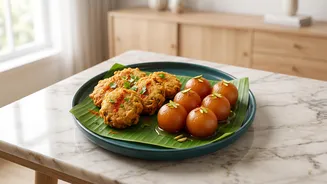
The Bengali culinary repertoire is famous for its variety of 'chops' and cutlets—essentially croquettes filled with deliciousness. Popular choices for Bijoya include Mochar Chop (made from banana blossoms), Vegetable Chop (a mix of beetroot, carrots, and potatoes), and Dim'er Devil (a hard-boiled egg encased in spiced minced meat). These are typically coated in breadcrumbs and deep-fried until crisp and golden on the outside, while remaining soft and flavourful inside. Served hot with a side of kasundi (a pungent mustard sauce), these chops offer a burst of complex flavours and textures.
Shingara: The Ever-Popular Triangle
The Bengali version of the samosa, Shingara, is another post-Pujo favourite. What sets it apart is its flaky, thin pastry and the distinct flavour of its filling. The classic Shingara is stuffed with a lightly spiced potato and cauliflower mix, often with peanuts for added crunch. The filling is seasoned with 'panch phoron', a five-spice blend that gives it a unique, aromatic profile. Its convenient, hand-held nature makes it an easy and mess-free snack for guests to enjoy while chatting.
Radhaballabhi with Alur Dom
For those hosting a more elaborate gathering, the combination of Radhaballabhi and Alur Dom is a showstopper. Radhaballabhi are soft, fried bread stuffed with a flavourful lentil paste. They are traditionally served with Alur Dom, a slow-cooked potato curry that is mildly spicy and rich with flavour. This pairing is more of a mini-meal than a light snack, perfect for guests who may be visiting around lunchtime or in the evening. It’s a combination that speaks of care and effort, making any visitor feel truly special.