




Seeing Yesterday's Universe
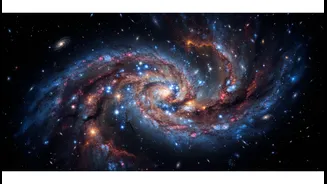
When you look at the stars, you're not seeing them as they are right now. You're seeing them as they were when their light began its journey to Earth. For nearby stars, that light is minutes or hours old. For the faint smudges of distant galaxies, it can
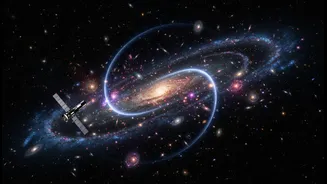
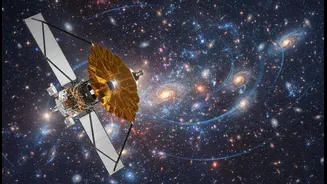
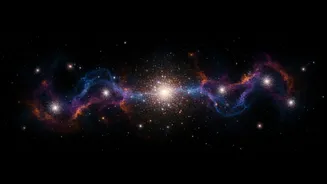
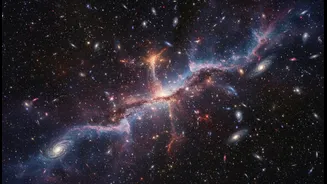
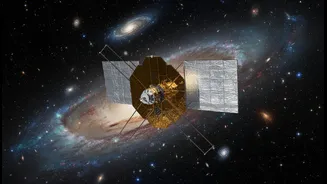
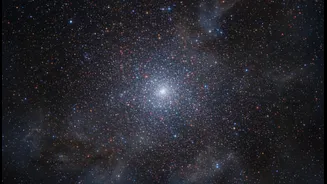
be billions of years old. The Hubble Space Telescope, orbiting above Earth's distorting atmosphere since 1990, is a premier time machine for this very reason. By pointing its sensitive instruments at a seemingly empty patch of sky for hours or even days, it can collect ancient photons that have been traveling for over 13 billion years, offering a direct window into the universe when it was just a fraction of its current age. The poetic term 'space shimmers' captures the essence of this—the faintest, most distant light we can detect from the first galaxies just starting to ignite.
What is Spectral Analysis?
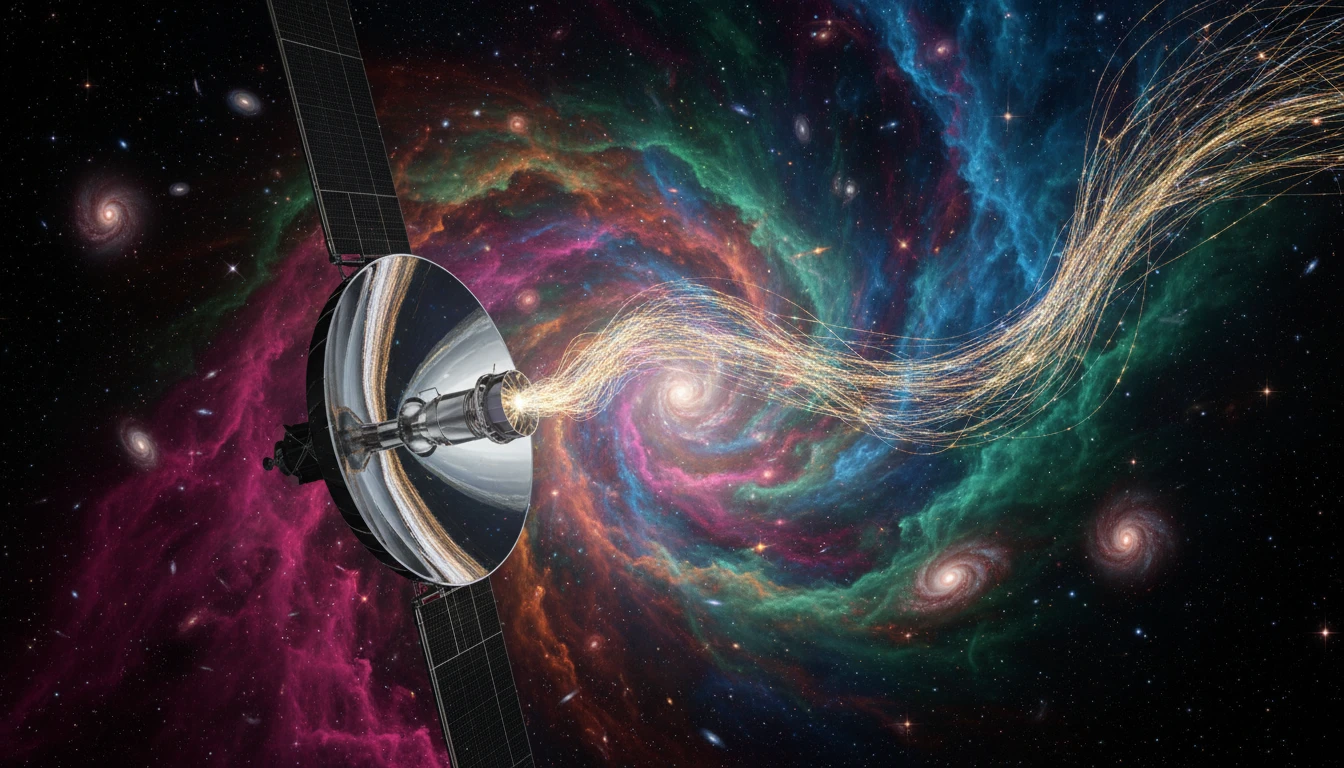
Capturing the ancient light is only the first step. To understand it, scientists use a powerful technique called spectroscopy, or spectral analysis. Think of it as putting cosmic light through a prism. Just as a prism splits sunlight into a rainbow, a scientific instrument called a spectrograph breaks the light from a single star or galaxy into its constituent colors or wavelengths. This resulting pattern, called a spectrum, is not a continuous, perfect rainbow. It is crossed by dark or bright lines, a unique 'barcode' left by the chemical elements within the distant object. Every element, like hydrogen or helium, absorbs and emits light at very specific wavelengths. By reading this spectral fingerprint, astronomers can determine a galaxy's chemical composition, temperature, density, and even how fast it's moving away from us.
Hubble's Chemical Sniffers
Hubble is equipped with a suite of sophisticated instruments, including powerful spectrographs that are essential for this kind of work. The Cosmic Origins Spectrograph (COS) is incredibly sensitive to faint ultraviolet light, perfect for studying distant, faint sources. The Space Telescope Imaging Spectrograph (STIS) is a versatile workhorse, capable of capturing high-resolution spectra across a wide range of wavelengths. Together, and often in conjunction with its powerful cameras like the Advanced Camera for Surveys (ACS) and Wide Field Camera 3 (WFC3), these instruments allow Hubble to perform detailed analyses of objects that are billions of light-years away. It’s one thing for Hubble to take a beautiful picture; it's another for its spectrographs to tell us what those beautiful objects are actually made of.
Reading the Cosmic Dawn
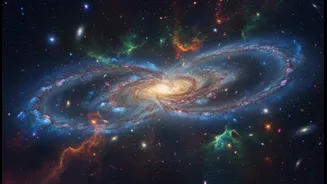
By analyzing the spectral barcode of 13-billion-year-old light, astronomers are piecing together the story of the early universe. These studies have revealed that the first galaxies were smaller, bluer, and forming stars at a much more furious rate than the galaxies we see today. The light tells a story of a universe just emerging from the cosmic 'dark ages'. Recent studies, sometimes combining Hubble data with that from other observatories, have detected energetic ultraviolet light from galaxies that existed at the end of the 'Epoch of Reionization'—the period when the first stars and galaxies burned off the neutral hydrogen fog that once filled the cosmos. Identifying the chemical signatures in these ancient shimmers helps scientists test and refine theories about how the first stars ignited and how heavier elements, essential for planets and life, were first created and distributed across the universe.
Why These Ancient Shimmers Matter
Understanding the chemical makeup of a galaxy 13 billion light-years away might seem abstract, but it's fundamental to understanding our own origins. The universe began with only the simplest elements: hydrogen and helium. Every other element—the carbon in our bodies, the oxygen we breathe, the silicon in our technology—was forged inside stars and spread through galactic evolution. By studying the composition of the earliest galaxies, we can trace this story of cosmic chemical enrichment from the very beginning. These faint, ancient shimmers of light carry the blueprint of cosmic evolution, helping scientists answer one of the biggest questions: how did we get from a hot, simple Big Bang to the complex, galaxy-filled universe we inhabit today?