

Bhubaneswar: The City of a Thousand Temples
Often called the 'Temple City of India', Bhubaneswar is the heart of any architectural exploration in Odisha. The city is a living museum, showcasing the evolution of Kalinga architecture, a style renowned for its distinctive form and intricate detail.
The landscape is dotted with hundreds of shrines, but a few stand out as pinnacles of this ancient art. A typical tour begins here, where every stone tells a story of devotion, artistry, and a civilisation at the peak of its creative powers. The temples are not just monuments; they are active centres of faith and community, forming the spiritual backbone of the city.
The Architectural Jewels: Lingaraj, Mukteshwar, and Rajarani
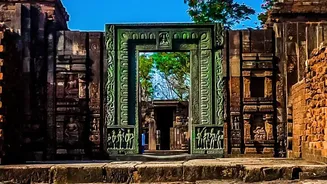
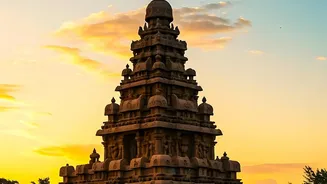
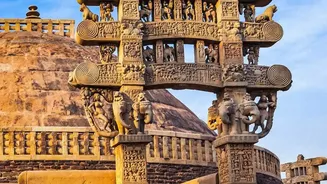
The Lingaraj Temple, an 11th-century marvel, dominates the skyline. This colossal structure, dedicated to Lord Shiva, represents the Kalinga style in its most mature and grandiose form, with its towering 180-foot 'vimana' (sanctum tower). Just as essential is the Mukteshwar Temple, often called the 'Gem of Odishan Architecture'. This 10th-century temple is celebrated for its exquisite stone archway, or 'torana', and detailed carvings that seem to bring the red sandstone to life. Another highlight is the Rajarani Temple, known as the 'Love Temple' for its stunning sculptures of graceful female figures and couples. Uniquely, it has no presiding deity, making it a monument celebrated purely for its artistic and architectural genius.
Raghurajpur: A Village Painted with Stories
A short journey from the temple city leads to Raghurajpur, India's first designated heritage crafts village. Here, art is not confined to a gallery; it adorns the walls of every home and is practiced by nearly every resident. The village is the global centre for Pattachitra, a traditional form of scroll painting on cloth. This ancient art, recognised by UNESCO, uses natural colours and intricate lines to depict mythological narratives with breathtaking detail. Visitors can walk through the two main streets, enter homes that double as studios, and watch master artisans, or 'Chitrakars', patiently bring tales of gods and heroes to life. Besides Pattachitra, the village is also a hub for palm leaf engraving, wood carving, and traditional mask making.
Pipili: The Canvas of Colours
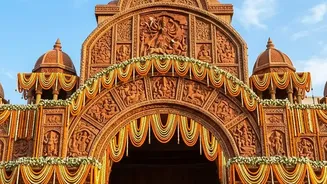
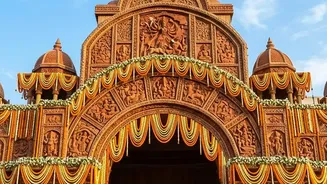
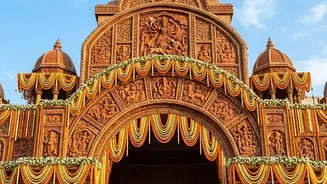
On the road between Bhubaneswar and Puri lies Pipili, a town famous for its vibrant appliqué work, known locally as 'Chandua'. This craft, which originated to serve the rituals of the great Jagannath Temple, involves stitching colourful fabric cut-outs onto a base cloth to create stunning designs. The main street of Pipili is a kaleidoscope of colour, with workshops displaying everything from large decorative umbrellas and canopies to handbags, lampshades, and wall hangings. The motifs often include flowers, animals, and geometric patterns, reflecting a tradition passed down through generations of the 'Darji' or tailor community.
Structuring Your Five-Day Cultural Immersion
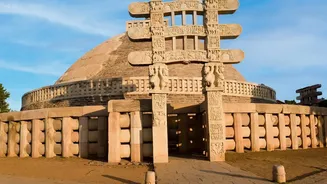
A well-paced five-day tour allows for a deep dive without feeling rushed. Dedicate the first two days to Bhubaneswar's architectural marvels, giving ample time to explore the main temple complexes like Lingaraj, Mukteshwar, and Rajarani, along with the nearby Udayagiri and Khandagiri caves. On day three, travel towards Puri, stopping at the Dhauli Stupa and the craft village of Pipili to witness the appliqué work. Day four is perfect for a full-day excursion to the heritage village of Raghurajpur, allowing time to interact with artisans and perhaps try your hand at painting. The final day can be spent exploring the spiritual atmosphere of Puri, including the famous Jagannath Temple, before concluding the journey. This itinerary provides a perfect balance of architectural grandeur and living artistic heritage.