






Secure Your Luggage, The Classic Way
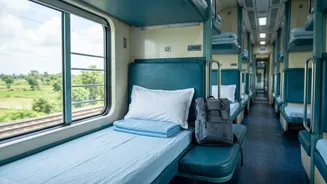
The most time-tested safety measure on Indian trains is the simple combination of a chain and a padlock. Most lower berths are equipped with metal rings or bars underneath them specifically for this purpose. Before settling in, loop a sturdy chain through
the handle of your suitcase or backpack and secure it to one of these fixed points. This is a powerful deterrent against opportunistic theft, especially while you are sleeping. If you don't have a chain, you can often purchase one at major railway stations, but it's always better to arrive prepared.
Pack a Small 'Go-Bag' for Valuables
Never leave your most critical items in your main luggage. Instead, pack a small crossbody bag, waist pouch, or a compact backpack with your absolute essentials: phone, wallet, ID, tickets, medications, and power bank. This bag should never leave your side. Keep it on your person when you walk around, take it with you to the restroom, and use it as a pillow or keep it tucked securely beside you when you sleep. This ensures that even if you are separated from your main luggage for any reason, your most important belongings are safe with you.
Choose Your Berth Wisely
Where you sleep can make a difference. Many solo female travellers prefer the upper berth for the added privacy and security it offers. It's harder for anyone to access your belongings, and you can tuck your bags into the corner. However, lower berths have easier access to restrooms and the space underneath to chain your luggage. In AC coaches, there is often a quota for women, which can provide an extra layer of comfort. Ultimately, choose the berth that best suits your comfort level and physical needs.
Be Smart About Food and Drink
One of the oldest warnings for train travel holds true: be extremely cautious about accepting food or drinks from strangers. While friendly conversations are part of the journey's charm, it's safest to politely decline any offered home-made snacks. Instead, rely on your own packed food, purchase sealed products, or order directly from official railway catering staff or authorized e-catering services. Always carry your own bottle of water to stay hydrated and avoid potential hygiene issues.
Master Your Digital Safety
In today's connected world, physical safety is only half the battle. Avoid using public or unsecured Wi-Fi networks at stations or on trains. It is far safer to use your own mobile hotspot. Charge your devices, especially your phone, before you board and carry a fully charged power bank, as plug points can be scarce and highly contested. Having a charged phone is crucial for navigation upon arrival, for entertainment, and most importantly, for any emergencies. Keep emergency numbers like the Railway Protection Force (RPF) helpline (182) saved in your contacts.
Practice Situational Awareness
The most effective safety tool is your own alertness. Be particularly vigilant at crowded stations and during stops in the middle of the night, as these are prime times for theft. Avoid displaying expensive gadgets like laptops or high-end cameras unnecessarily. When sleeping, try to position your head near the window rather than the aisle. If you are travelling alone, consider making polite conversation with a family travelling in the same compartment; having a friendly face nearby can add to your sense of security.
Essential Packing Checklist for Comfort
Beyond security items, a few essentials can drastically improve your journey. Pack comfortable clothing you can sleep in, like leggings and a t-shirt. Earplugs and an eye mask are invaluable for blocking out light and noise. Don't forget hand sanitiser, wet wipes, and a small amount of toilet paper, as restroom supplies can be unreliable. A small, lightweight towel and basic toiletries in a waterproof pouch will make freshening up much easier. Finally, slip-on shoes or flip-flops are perfect for late-night trips to the washroom.