



Understanding the Agony of a Muscle Cramp
We’ve all been there. You’re hitting your stride on a run or pushing through that final set of reps when, out of nowhere, a muscle locks up in a painful, involuntary spasm. For a long time, the primary suspect was simply dehydration. While a lack of water
is certainly a major factor, the science of exercise-induced muscle cramps (EAMCs) reveals a more complex story. Recent studies suggest that it's often not just water loss, but the loss of crucial minerals known as electrolytes, that sends our muscles into protest. Drinking plain water can sometimes even make the problem worse by further diluting the body's electrolyte concentration.
Meet the Electrolytes: The Spark Plugs for Your Muscles
Think of electrolytes as the tiny, electrically charged minerals that manage many of your body's most important jobs. Key players like sodium, potassium, calcium, and magnesium are vital for nerve signalling, fluid balance, and, most importantly for our purposes, muscle contraction and relaxation. During a sweaty workout, you lose these essential minerals. An imbalance, particularly between sodium and potassium, can disrupt the signals between nerves and muscles, causing them to contract uncontrollably — the very definition of a cramp. This is why simply rehydrating with water isn't always enough; you need to replace the lost electrolytes, too.
Coconut Water: Nature's Potassium Powerhouse
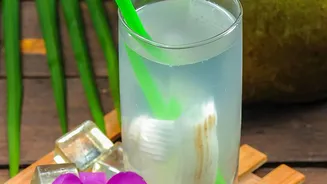
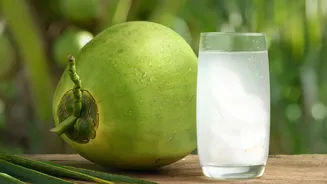
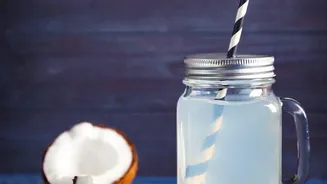
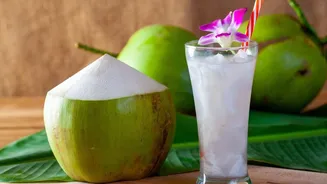
This is where coconut water enters the picture. Often called 'nature's sports drink', it's celebrated for its impressive nutritional profile. Its main claim to fame is its high potassium content, often containing more than a banana and significantly more than most commercial sports drinks. Potassium is essential for helping muscles relax after a contraction. When you sweat, you lose potassium, and replenishing it is crucial for preventing cramps. Coconut water provides a natural, easily digestible source of this vital mineral, along with other helpful electrolytes like magnesium and calcium.
The Missing Piece: A Pinch of Rock Salt
While coconut water is a star player, it has one minor weakness in the context of intense exercise: it's relatively low in sodium. Sodium is the primary electrolyte lost in sweat and is critical for maintaining fluid balance and enabling nerve impulses that trigger muscle contractions. This is where a pinch of rock salt comes in to complete the formula. Adding salt boosts the sodium content, creating a more balanced electrolyte solution that mirrors what your body loses during a workout. Unlike processed table salt, rock salt is minimally processed and contains other trace minerals that support overall hydration.
The Perfect DIY Sports Drink
When you combine the potassium-rich profile of coconut water with the sodium-boosting power of rock salt, you create a synergistic effect. The two minerals work together in what is known as the sodium-potassium pump, a mechanism in every cell that regulates nerve signaling and muscle function. Sodium helps the body hold onto water, improving hydration, while potassium ensures muscles can contract and relax smoothly. This combination effectively creates a natural, homemade oral rehydration solution, helping to replenish both fluids and the key electrolytes lost during exercise, thus addressing the root cause of many cramps.
How to Use It for Best Results
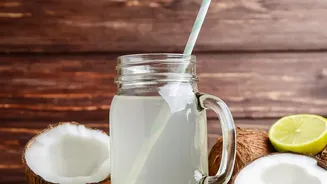
Making your own anti-cramp drink is simple. Just add a small pinch (about 1/8 to 1/4 of a teaspoon) of rock salt to a standard 250-300 ml glass of natural, unsweetened coconut water and stir until it dissolves. For best results, consider drinking it about 30-60 minutes before your workout to pre-load your muscles with the necessary electrolytes. For longer or more intense sessions, especially in the heat, you can also sip on it during your workout to stay ahead of depletion. It serves as an excellent recovery drink as well, helping your body rehydrate and replenish its mineral stores more effectively than water alone.