



Saturn Shines Brightly All Night
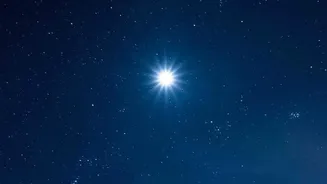
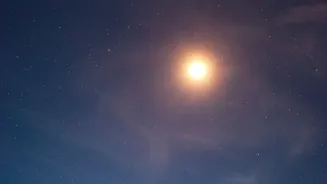
Throughout the last weeks of August, the planet Saturn will be a standout feature in the night sky. Rising in the east in the evening, it will appear as a steady, bright, golden point of light, making it relatively easy to spot because planets do not
twinkle like stars. While its absolute brightest moment, known as opposition, will be in early October, the lead-up during August provides excellent viewing opportunities. For an easy-to-find spectacle, look for the planet on the nights of August 30th and 31st. The waning gibbous moon will pass close to Saturn, creating a beautiful pairing in the sky that will help you locate the ringed planet without any special equipment. You can find Saturn within the constellation of Pisces, visible for over seven hours from the late evening until sunrise.
A Full Moon with a Partial Eclipse
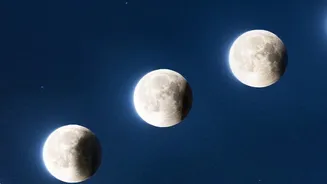
Mark your calendars for August 28th, when the month’s full moon will grace the sky. This full moon is particularly noteworthy because it will also undergo a partial lunar eclipse. This occurs when a portion of the moon passes through the Earth's darkest shadow, known as the umbra. As a result, part of the lunar surface will appear noticeably darker than the rest. Unfortunately for viewers in India, the partial lunar eclipse itself will not be visible from the subcontinent. However, the full moon on this night will still be a beautiful sight, rising in the evening and illuminating the night sky. The full moon officially occurs at 9:48 am IST, meaning it will be at its most impressive on the nights of both August 27th and 28th.
The Tail End of a Famous Meteor Shower
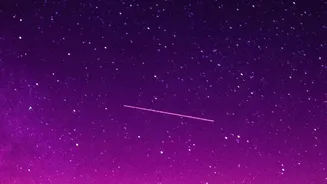
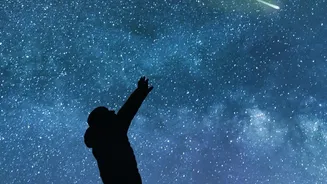
The famous Perseid meteor shower peaks earlier in the month, around August 12-13, under ideal moonless conditions. However, the shower remains active all the way until September 1st. While the rate of meteors will have decreased significantly by the last two weeks of August, patient skywatchers still have a chance to spot a few lingering “shooting stars.” The Perseids are known for producing bright, fast meteors that often leave persistent trails. For your best chance, find a location away from city lights, let your eyes adjust to the darkness for about 20-30 minutes, and look towards the northeastern sky. While the peak is over, the magic isn’t entirely gone, and a late Perseid meteor can be a delightful surprise.
Best Practices for Stargazing
To make the most of these celestial events, a few simple tips can dramatically improve your experience. First and foremost, escape light pollution. The darker your surroundings, the more you will see. This is especially true for faint objects like meteors. Consider heading to a park, a rural area, or a designated dark-sky spot if one is nearby. Places like the Rann of Kutch, Spiti Valley, and Hanle in Ladakh are famous for their clear, dark skies. Second, give your eyes time to adapt. It takes about 20-30 minutes for your pupils to fully dilate and become sensitive to low light. Avoid looking at your bright phone screen during this time. Finally, while all the events mentioned are visible to the naked eye, a pair of binoculars can enhance the view, especially for getting a better look at Saturn or the texture of the full moon.