




Cosmic Misfits in the Spotlight
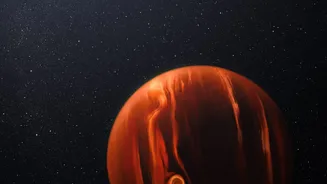
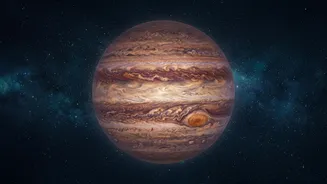
Imagine an object more massive than Jupiter but not quite hefty enough to ignite into a full-blown star. That's a brown dwarf. They form from collapsing clouds of gas and dust, just like stars, but lack the critical mass to sustain the hydrogen fusion
that makes stars shine. For years, scientists viewed them as a somewhat homogenous group of celestial bodies that simply cooled and faded over time after an initial burst of heat from deuterium fusion. They were the universe's wanderers, often floating alone in the dark, making them difficult to study in detail. While telescopes like the James Webb and the retired Spitzer have observed them, our understanding was based on a small sample size and theoretical models.
A New Eye on the Infrared Sky
Enter SPHEREx, which stands for Spectro-Photometer for the History of the Universe, Epoch of Reionization, and Ices Explorer. Launched in March 2025, this space observatory is conducting an all-sky survey in near-infrared light, which is invisible to the human eye but perfect for peering into the cool, dim environments of objects like brown dwarfs. Unlike ground-based telescopes, which are hindered by water in Earth's atmosphere absorbing infrared wavelengths, SPHEREx has an unobstructed view. By scanning the entire sky every six months, the mission is creating an unprecedented map in 102 different colors of light, providing a rich spectral fingerprint for hundreds of millions of objects.
A Surprising Menagerie of Worlds
Early findings from the SPHEREx survey, detailed in a recent study in The Astrophysical Journal, are painting a much more complex picture of these cosmic loners. After analyzing just a few dozen of the thousands of brown dwarfs SPHEREx is observing, scientists have found a surprising amount of diversity. It turns out that even at the same temperature, no two brown dwarfs necessarily look alike. Their spectra—the patterns of light they emit—show distinct variations, challenging existing models that have tried to predict their evolution and appearance. The data reveals that their atmospheres are chemically rich, containing molecules like methane, carbon dioxide, and carbon monoxide, much like the gas giants in our own solar system.
Clouds, Chemistry, and Formation
So why the variety? The answer appears to lie in their cloudy, dynamic atmospheres. SPHEREx is particularly adept at observing a phase in a brown dwarf's life when its exotic clouds begin to break apart, revealing a methane-rich atmosphere underneath. The composition, thickness, and behavior of these clouds can significantly alter the light that escapes, making each brown dwarf's signature unique. The initial conditions of their formation may play a major role. Theories suggest brown dwarfs can form through different mechanisms, including turbulent fragmentation of gas clouds or being ejected from a larger star-forming system. These different origins could embed them with distinct chemical makeups and rotational speeds, influencing their atmospheric 'weather' for billions of years. Current atmospheric models are struggling to fully explain the diversity SPHEREx is now revealing.