





Mastering Natural Light with Curtains
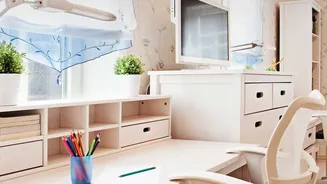
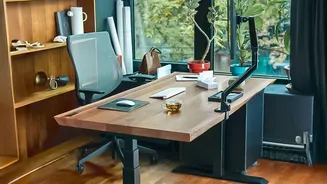
Natural light is a powerful tool for productivity, linked to better moods, fewer headaches, and even improved sleep. The first step is positioning your desk correctly—ideally, perpendicular to the window, not directly in front of or behind it. This simple
change minimizes both direct glare and distracting reflections on your screen. But raw sunlight can be too harsh. This is where curtains become essential. Sheer or light-filtering curtains are an excellent choice as they soften intense daylight, reduce glare, and create a comfortable, usable glow without darkening the room. For rooms that get intense sun, layering a sheer curtain with a heavier blackout drape gives you ultimate control, allowing you to block light completely for presentations or deep focus sessions.
The Three Layers of Lighting
A single overhead light is a common cause of eye strain. Professional designers use a layered approach to create balanced and effective lighting. For a workspace, this means combining three types: ambient, task, and accent lighting. Ambient light is the general, overall illumination for the room, usually from a ceiling fixture or floor lamps that bounce light off the ceiling. Task lighting is the most critical for work; it's the focused light on your immediate desk area from a dedicated lamp. Accent lighting is the final layer, used to highlight features like a bookshelf or a piece of art, adding depth and personality to the space and preventing the feeling of working in an isolated pool of light.
Choosing the Perfect Task Lamp
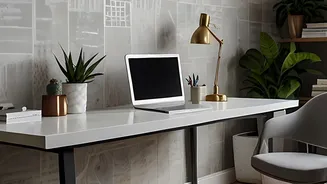
Your desk lamp is your most important lighting tool. An adjustable task lamp is non-negotiable for an ergonomic setup, as it allows you to direct light precisely where needed and eliminate shadows. For the best results, position the lamp on the opposite side of your writing hand to prevent casting shadows on your work. Look for a lamp with an adjustable neck and head, and ideally, dimmable controls. This lets you tailor the brightness for different activities—reading paper documents requires more light than working on a screen. The goal is to illuminate your desk surface to about 300-500 lux, a level that provides clarity without causing glare. Many smartphones have free light meter apps that can help you get a surprisingly good estimate.
Getting the Color Temperature Right
Not all light is created equal. The color of the light, known as its color temperature and measured in Kelvins (K), has a significant impact on your mood and alertness. For a home office, a range between 2700K and 4000K is generally recommended. Light in the warmer 2700K-3000K range is calming and good for sustained concentration and general ambient lighting. A slightly cooler light, around 4000K, can help boost alertness and is excellent for task lamps used during focused work sessions. Some experts suggest even cooler temperatures up to 5000K for intense, detail-oriented tasks. Avoid using very warm, relaxing light for task work during the day, as it can inadvertently lower your concentration.
Creating a Cohesive and Productive Space
Finally, bring it all together by ensuring your curtains and lamps work in harmony. The style should feel connected to the rest of your home, especially if your workspace is visible on video calls. Neutral-toned curtains in beige, gray, or soft blues can create a calm, focused atmosphere. Your lamps should complement this aesthetic. Beyond style, consider how the layers of light interact. Use your curtains to manage the powerful natural light, then fill in with ambient light from a stylish floor lamp in the corner. Add your adjustable task lamp for focused work. The combination creates a balanced, inviting, and visually comfortable environment that not only looks good but actively helps you perform your best work without the unnecessary fatigue caused by poor lighting.