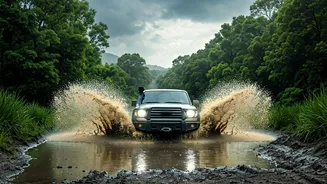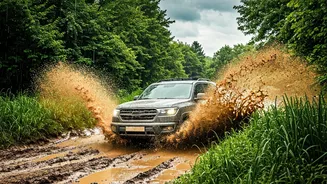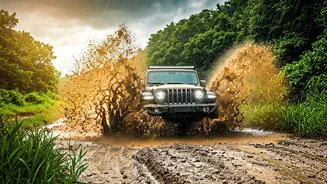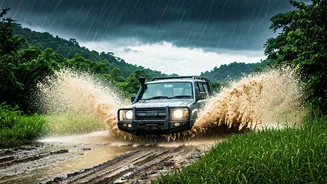









The Allure of the Slush
There’s a certain magic to off-roading when the heavens open up. The dust settles, replaced by the rich, earthy smell of petrichor. Lush greenery carpets the hillsides, and seasonal waterfalls appear from nowhere. For off-roaders, this isn’t just a scenic
drive; it’s the ultimate test of skill and machine. The challenge of navigating a trail that changes its character with every shower is the main draw. It’s about the dynamic interplay between driver, vehicle, and a wild, unpredictable landscape. While a dry trail can be mastered and memorised, a monsoon trail is a new puzzle every time, demanding constant focus and adaptation. This unpredictability is what fuels the adrenaline and creates stories that are retold for years.
Nature's Obstacle Course
Monsoon off-roading is not for the faint of heart. The primary challenge is, of course, mud. It comes in all varieties: slick top-layer mud that sends you sliding, and deep, sticky slush that threatens to swallow your vehicle whole. Mastering the art of 'slush-planing' and maintaining momentum without spinning your wheels is a core skill. Beyond the muck, drivers contend with water crossings that are deeper and faster than usual. Judging the depth and current of a seemingly innocent stream becomes a critical decision. Rocky sections, which offer good grip when dry, become treacherous and slippery when wet. Add to this the ever-present risk of fog reducing visibility to near zero and the potential for minor landslides on hilly terrain. Each obstacle requires a unique approach and a deep respect for the power of nature.
Gearing Up for the Grip
Success in the monsoon mud is born from preparation. Your vehicle is your partner, and it needs to be equipped for the task. The single most important upgrade is tyres. Standard highway tyres will turn your 4x4 into a helpless sled. Aggressive Mud-Terrain (MT) tyres are non-negotiable; their deep treads are designed to bite into soft ground and clear mud. A snorkel is another essential piece of kit. This raised air intake allows your engine to breathe clean air even when you’re wading through deep water, preventing a catastrophic hydrolock. Equally vital is recovery gear. A reliable winch, sturdy tow straps, D-shackles, and a high-lift jack are not luxuries but necessities. You don't want to discover you need them when you're stuck in the middle of nowhere with no mobile signal.
The Driver Is the Difference
A kitted-out vehicle is only half the equation. The most crucial component is the person behind the wheel. Monsoon off-roading demands patience and a delicate touch. Aggressive, heavy-footed driving will only get you stuck faster. It’s about feeling the terrain through the steering wheel and applying just enough throttle to maintain momentum. One of the golden rules is to never go alone. Off-roading is a team sport, especially in the monsoon. Travelling in a convoy of at least two or three vehicles ensures that if one gets stuck, there’s help at hand. Good communication via walkie-talkies, a clear plan for the trail, and agreeing on a lead and sweep vehicle are all part of smart convoy etiquette that ensures everyone gets home safely.
Monsoon Hotspots
Across India, certain regions have become legendary for their monsoon off-road experiences. The Western Ghats in Maharashtra, particularly the areas around Lonavala, Malshej Ghat, and Igatpuri, offer a network of challenging trails with stunning views of verdant valleys. In the south, Sakleshpur and Coorg in Karnataka are famous for their coffee plantation trails that turn into slippery, technical tracks during the rains. For those seeking a different flavour, the Aravalli hills in Rajasthan and the foothills of the Himalayas near Uttarakhand offer their own unique blend of rocky and slushy challenges, all set against a dramatically green backdrop.