
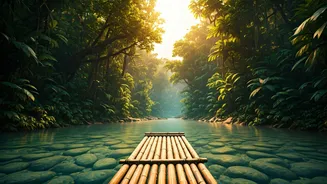
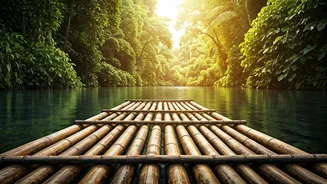
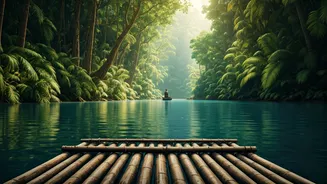


An Ancient, Simple Vessel
Forget the roar of a motorboat or the sharp slice of a kayak. A bamboo raft is perhaps one of the most elemental forms of water transport. For centuries, communities living near rivers have used these sturdy, buoyant structures for fishing, transport,
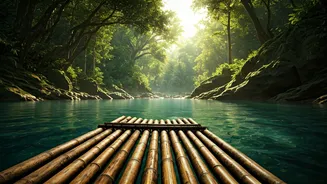
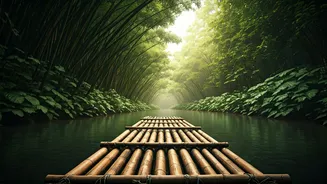
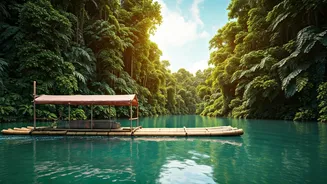
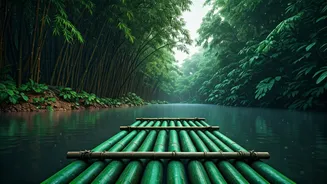
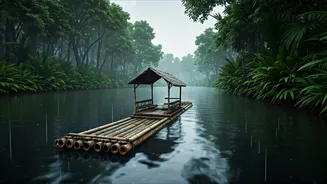
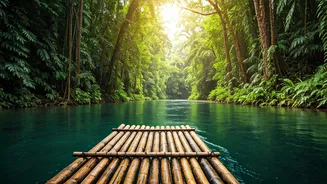
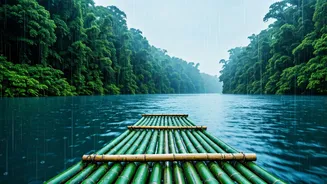
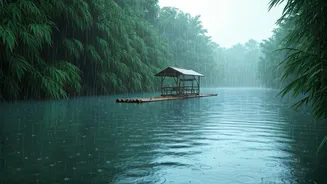
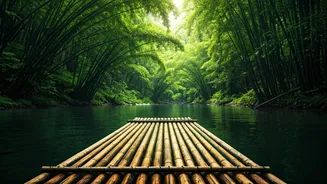
and connection. Today, experiencing it as a traveller is a lesson in beautiful simplicity. The raft itself is a piece of nature. You can feel the texture of the large bamboo stalks under your feet, lashed together with coir rope. There is no barrier, no plastic hull, no engine separating you from the water. You are, quite literally, floating on a piece of the forest.
The Symphony of the River
In our daily lives, we are surrounded by a constant hum of traffic, notifications, and urban noise. On a bamboo raft, that noise is replaced by a profound, restorative quiet. This absence of man-made sound allows the subtle symphony of the wild to emerge. You begin to hear things you would otherwise miss: the distinct call of a Malabar trogon, the rustle of leaves on the riverbank hinting at a foraging animal, the drone of a dragonfly as it hovers over the water’s surface. This auditory immersion is a powerful way to feel part of the ecosystem, rather than just an observer passing through it. The slow, rhythmic journey encourages listening, turning the ride into a meditative experience.
A Slower, More Observant Pace
The pace of a bamboo raft is dictated by the river's current and the gentle push of your guide's pole. This unhurried movement is the antithesis of modern, rushed tourism. You are not racing to a destination; the journey itself is the main event. This slow pace forces you to change your perspective. Instead of seeing the riverbank as a blurry green streak, you start noticing the details: a vibrant kingfisher perched on a branch, a turtle sunning itself on a rock, the intricate patterns of light filtering through the dense canopy. It encourages a state of mindfulness, where you are fully present in the moment, observing the world around you with fresh eyes and a calm mind.
An Eco-Conscious Journey
The appeal of bamboo rafting also lies in its inherently low environmental impact. Bamboo is a fast-growing, sustainable grass that requires no pesticides and regenerates quickly. The rafts are biodegradable and built using traditional methods, leaving a minimal footprint on the delicate riverine ecosystems they traverse. For the conscious traveller, choosing bamboo rafting feels like a vote for responsible tourism. It’s an activity that respects its environment, allowing you to enjoy the beauty of nature without contributing to its degradation. This alignment of action and values deepens the sense of connection, creating a guilt-free and harmonious experience.
Where to Find the Magic in India
India offers several stunning locations to experience this unique activity. In Kerala, the Periyar Tiger Reserve in Thekkady provides one of the most famous bamboo rafting programmes, taking you through the heart of the sanctuary with chances to spot elephants, gaur, and sambar. Also in Kerala, Wayanad’s Kuruva Island offers serene rides on the Kabini River's tributaries. In Karnataka, the waters of the river Kaveri near the Dubare Elephant Camp in Coorg provide another picturesque setting. Each location offers a different flavour of natural beauty, but the core experience remains the same: a quiet, intimate journey that reconnects you with the wild heart of the country.