


The Finnish Dream, Curated for Your Feed
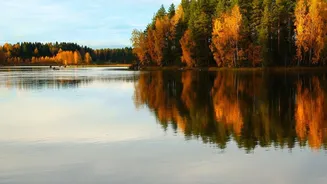
Scroll through Instagram or TikTok, and the vision of Finland is intoxicating. You'll see photos of the iconic national landscape from Koli National Park, overlooking the frozen expanse of Lake Pielinen. You'll find images of hikers standing in quiet
awe amidst the 'tykky' snow-crowned trees of Riisitunturi National Park, a scene of almost surreal winter beauty. And in Lapland, the official 'hometown of Santa Claus' in Rovaniemi promises magical encounters with reindeer under the glow of the Northern Lights. This carefully curated version of Finland, amplified by travel influencers and algorithms, sells a promise of untouched nature and peaceful isolation. It's a powerful marketing tool that has successfully positioned the Nordic nation as a top travel destination for those seeking an escape from the noise of modern life.
An Unexpected Reality: The Landmark Queue
The problem is, thousands of people are seeking the exact same escape, in the exact same spots. Upon arriving at these 'must-see' locations, many visitors are met not with silence, but with the chatter of crowds and the click of camera shutters. While sources suggest that solitude can still be found by venturing off the main trails, the most famous viewpoints are often congested. Reports from popular parks like Koli note that the main lookout points can get very busy, especially during peak seasons like summer and autumn holidays, with parking lots filling up early in the morning. In Lapland, the situation is even more pronounced. The Santa Claus Village in Rovaniemi attracts over 600,000 visitors annually, with tourist numbers at peak times reaching ten times the local population, leading to what many locals now describe as 'overtourism'. This phenomenon isn't about a lack of beauty, but a concentration of demand on a few specific, hyper-photogenic places.
The 'Instagram Effect' in the Arctic
This concentration is a direct result of the 'Instagram effect'. Social media has transformed how we travel, shifting the goal for many from authentic experience to capturing a specific, pre-validated photo. When a location like a viewpoint in Koli or Santa's Village goes viral, it creates a feedback loop: people see the photo, want the photo, and travel there to get it. This funnels a massive number of visitors into small, sensitive areas that weren't designed for high traffic. The result is not just crowdedness, but potential strain on local infrastructure and the environment. In Rovaniemi, for example, the boom in short-term rentals to accommodate the tourist surge has reportedly driven up housing prices for residents. The very act of seeking an 'authentic' natural experience, when mediated through a screen, can end up diluting the magic for everyone.
Is the Solitude Still There?
So, is Finland truly 'overhyped'? Perhaps not. Instead, it may be more accurate to say that travellers' approaches have become narrowly focused. The issue is less about the country as a whole and more about specific 'hotspots' that have become victims of their own photogenic success. The irony is that the solitude and peace Finland is famous for are still widely available, often just a short walk away from the crowded main attractions. In Koli National Park, for instance, while the main Ukko-Koli peak is busy, the park’s southern regions and lesser-known trails offer genuine tranquility. The phenomenon of overtourism highlights a growing disconnect between the curated image of travel and the on-the-ground experience. One Finnish island, Ulko-Tammio, has even begun marketing itself as a 'phone-free zone' to encourage visitors to disconnect from social media and engage with the nature around them.