



First, What Is Zone 2 Training?
Forget the high-intensity, 'no pain, no gain' mantra for a moment. Zone 2 training is all about exercising at a low-to-moderate intensity. It's often called the 'conversational pace' because you should be able to hold a conversation without gasping for air.
On a heart rate scale of one to five, Zone 2 is the second level, typically sitting at about 60% to 70% of your maximum heart rate. It's a comfortable, steady effort that you can sustain for longer periods—think 30, 60, or even 90 minutes. This isn't about pushing your limits on every workout; it's about building a solid foundation for your overall fitness. It’s the kind of cardio that builds you up, rather than breaks you down.
The 'Slow and Steady' Secret Weapon
The magic of Zone 2 lies in its physiological benefits. Training at this moderate intensity is incredibly effective for improving your aerobic base. It enhances your body's ability to use oxygen efficiently, primarily by boosting the function and number of your mitochondria—the powerhouses of your cells. This type of training also excels at teaching your body to burn fat for fuel, rather than relying solely on carbohydrates. Over time, consistent Zone 2 work can lead to a lower resting heart rate, improved cardiovascular health, and better recovery between harder workouts. It builds the endurance 'engine' that allows you to go farther and feel stronger, not just in your workouts, but in daily life.
Why the Rower Is the Perfect Partner
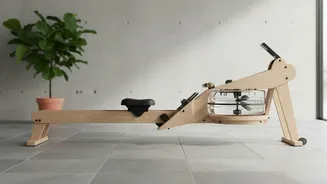
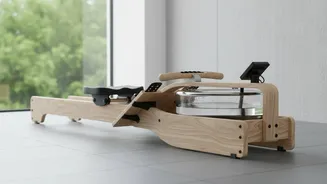
You can do Zone 2 training on a bike, a treadmill, or by briskly walking. So why is the rowing machine getting so much attention? Because it provides a unique combination of benefits that are perfectly suited for this style of training. Firstly, rowing is a full-body workout. A single stroke engages an estimated 86% of your muscles, from your legs and glutes to your core and arms. This means you get more metabolic bang for your buck, elevating your heart rate into the desired zone efficiently. Secondly, it’s exceptionally low-impact. The fluid motion protects your joints from the pounding stress associated with exercises like running, making it a sustainable choice for people of all ages and fitness levels. This allows for the longer, consistent sessions that are key to reaping the rewards of Zone 2.
Finding Your Zone and Getting Started
Ready to try it? The first step is to figure out your personal Zone 2. A simple and widely used method is to estimate your maximum heart rate (MHR) by subtracting your age from 220. Then, calculate 60-70% of that number. For a 40-year-old, MHR is around 180, so Zone 2 would be between 108 and 126 beats per minute. However, an even simpler method is the 'talk test': just start rowing at a pace where you can comfortably speak in full sentences. If you're getting breathless, ease off. If you can sing an opera, you can probably pick up the pace a little.
A Sample Zone 2 Rowing Workout
A typical Zone 2 rowing session is straightforward. Start with a gentle five-minute warm-up, gradually increasing your pace. Then, settle into a steady rhythm that keeps your heart rate in Zone 2 (or at your 'conversational' effort) for 30 to 45 minutes. Focus on maintaining good form: a powerful leg drive, a strong core, and a smooth pull with the arms. Don't worry about your speed or split time; the goal is simply to keep your heart rate in the zone. Finish with a five-minute cool-down, allowing your heart rate to return to normal. The key is consistency. Aim for two to three of these sessions per week to build a powerful aerobic base.