







The Processing Divide
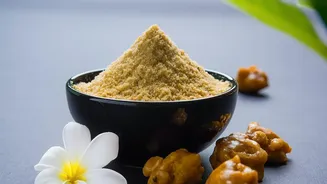
The primary difference between jaggery and white sugar lies in their production. Jaggery is an unrefined sweetener made by boiling sugarcane juice until it solidifies. This minimal processing means it retains the natural molasses, which gives it a golden-brown
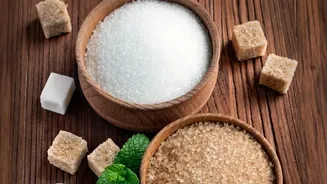
colour and a complex, caramel-like flavour. White sugar, on the other hand, undergoes extensive refining. The sugarcane juice is processed to remove all molasses and minerals, resulting in pure, white sucrose crystals with a neutral taste. This refining process strips away any nutrients present in the original sugarcane.
A Nutritional Showdown
On the surface, jaggery appears to be the clear winner. While white sugar provides 'empty calories' with no nutritional value, jaggery contains trace amounts of essential minerals. A 100-gram serving of jaggery can offer significant amounts of iron, potassium, magnesium, and calcium. However, it's crucial to consider portion sizes. A typical serving of jaggery is around 10 grams, and at this amount, the mineral contribution is quite small. Calorie-wise, both are nearly identical, with 100 grams of jaggery containing about 383 calories and white sugar about 387.
The Glycemic Index Surprise
A common belief is that jaggery is safer for blood sugar levels. However, this is a significant misconception. Surprisingly, most studies show that sugarcane jaggery has a higher glycemic index (GI) — around 84 — compared to white sugar, which has a GI of about 65. This means that sugarcane jaggery can raise blood sugar levels even faster than white sugar. For individuals with diabetes or insulin resistance, neither sweetener is a 'safe' option, and both should be consumed with extreme caution and in moderation.
Jaggery’s Health Halo: Fact vs. Fiction
Traditional Ayurvedic medicine has long praised jaggery for its health benefits, such as aiding digestion, purifying the blood, and boosting immunity. Scientific studies suggest that the antioxidants and minerals in jaggery, like selenium and zinc, may support some of these claims. It is also believed to help cleanse the respiratory tract. However, it is not a magic bullet. Overconsumption can lead to digestive issues like bloating and constipation, and since it is still sugar, it contributes to the risk of weight gain and dental problems when eaten in excess.
The Big Picture: Sweeteners in Context
The debate over jaggery versus white sugar often misses the most important point, as highlighted in the headline. The real issue is the total amount of added sugar in your diet, not the specific type. Replacing sugar with jaggery without reducing the overall quantity will not lead to weight loss or significant health improvements. Both are concentrated sources of sugar, and health organisations recommend limiting the intake of all free sugars. The choice between them is less about a massive health advantage and more about flavour preference and choosing a less processed food.