






The Hidden Cost of a Sedentary Life
Modern urban life often involves prolonged periods of sitting—at a desk, in a car, or on the couch. This inactivity is a primary contributor to premature joint wear. When joints aren't moved through their full range of motion, the surrounding muscles
can weaken, and the production of synovial fluid, which lubricates the joints, decreases. This leads to increased friction, stiffness, and uneven pressure on the cartilage that cushions your bones. Over time, poor posture and a sedentary lifestyle can lead to chronic pain and conditions like osteoarthritis. The good news is that proactive, simple habits can significantly mitigate these risks.
Mobility: The 'Lotion for Your Motion'
Think of daily mobility exercises as essential maintenance for your body. Consistent movement is crucial for joint health because it stimulates the circulation of synovial fluid, which nourishes cartilage and keeps joints moving smoothly. Regular mobility work, especially for the knees, helps maintain flexibility in the surrounding muscles and ligaments, enhances stability, and reduces the risk of injury. By strengthening the muscles that support the knee, such as the quadriceps, you offload direct pressure from the joint itself, helping to preserve it for the long term.
Three Simple Exercises for Knee Health
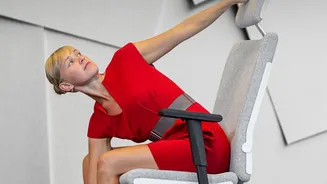
You don't need a gym to keep your knees healthy. These simple exercises can be done at your desk or at home to combat stiffness.1. Seated Knee Extensions: Sit upright in a chair with your feet flat on the floor. Slowly straighten one leg out in front of you until it is parallel to the floor, holding for a few seconds. Gently lower it back down. This targets the quadriceps, which are vital for knee stability. Aim for 10-15 repetitions on each leg.2. Heel Slides: While seated or lying down, slowly slide the heel of one foot toward your body, bending your knee as far as is comfortable. Then, slowly slide it back to the starting position. This gentle motion improves the knee's range of motion without putting stress on the joint.3. Ankle Circles: While seated, lift one foot slightly off the floor and slowly rotate your ankle in a circular motion, first clockwise and then counter-clockwise. This subtle movement also encourages mobility in the knee joint and prevents stiffness from setting in.
Ergonomics: Your Posture's Best Friend
While mobility exercises are active interventions, ergonomics offers a passive way to protect your joints throughout the day. Ergonomics is the science of designing your environment to fit your body, rather than forcing your body to fit the environment. A proper ergonomic setup minimizes strain on your muscles and joints by ensuring your body maintains a neutral alignment. This even distribution of weight prevents the focused, sustained pressure on your knees, hips, and spine that leads to long-term damage.
Quick Ergonomic Fixes for Your Workspace
Making a few small adjustments to your workspace can have a massive impact on your joint health. Start with these tips to create a more supportive environment:Chair Height: Adjust your chair so your feet rest flat on the floor and your knees are at a 90-degree angle, level with or slightly below your hips. This relieves pressure on the knees.Monitor Position: Place your computer monitor at eye level and about an arm's length away. This prevents you from hunching forward, which misaligns your spine and affects your entire posture down to your hips and knees.Consider a Footrest: If your feet don't comfortably reach the floor, use a footrest. This ensures your knees remain at the correct angle and reduces strain.Take Movement Breaks: Perhaps the most crucial ergonomic tip is to not stay in one position for too long. Stand up, stretch, and walk around for a few minutes every 30-60 minutes to promote circulation and prevent stiffness.