



Seeing the Invisible Universe
Infrared astronomy is the study of the universe using infrared light, a type of light that is invisible to the human eye. Think of it as the heat radiation that all objects, from people to planets, emit. While our eyes see a limited rainbow of visible light, the universe is brimming
with information at other wavelengths. Cooler objects, like forming stars, exoplanets, and clouds of cosmic dust, glow brightest in the infrared. For decades, this part of the cosmos was largely hidden from us. Earth's atmosphere, particularly water vapour, blocks most infrared radiation from reaching the ground, making space-based telescopes essential for a clear view.
The Power to Peer Through Dust
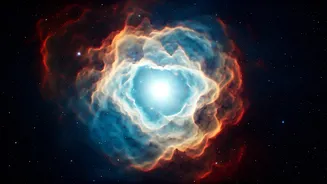
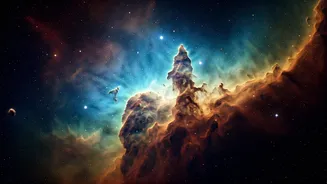
One of infrared's greatest superpowers is its ability to penetrate the dense clouds of gas and cosmic dust that are scattered throughout galaxies. Visible light, with its shorter wavelengths, gets scattered and blocked by these dust particles, much like headlights in a thick fog. This means traditional optical telescopes can't see what's happening inside stellar nurseries, where new stars and planets are born. Infrared light, however, has longer wavelengths that can slip past the dust, giving astronomers an unobstructed view of these creative processes. This is how we get those breathtaking images of previously hidden stars sparkling within nebulae.
A Telescope Named Webb Changes Everything
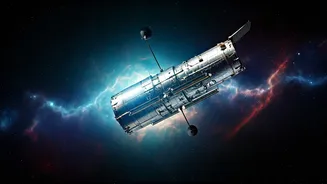
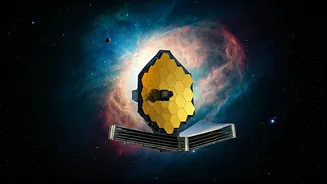
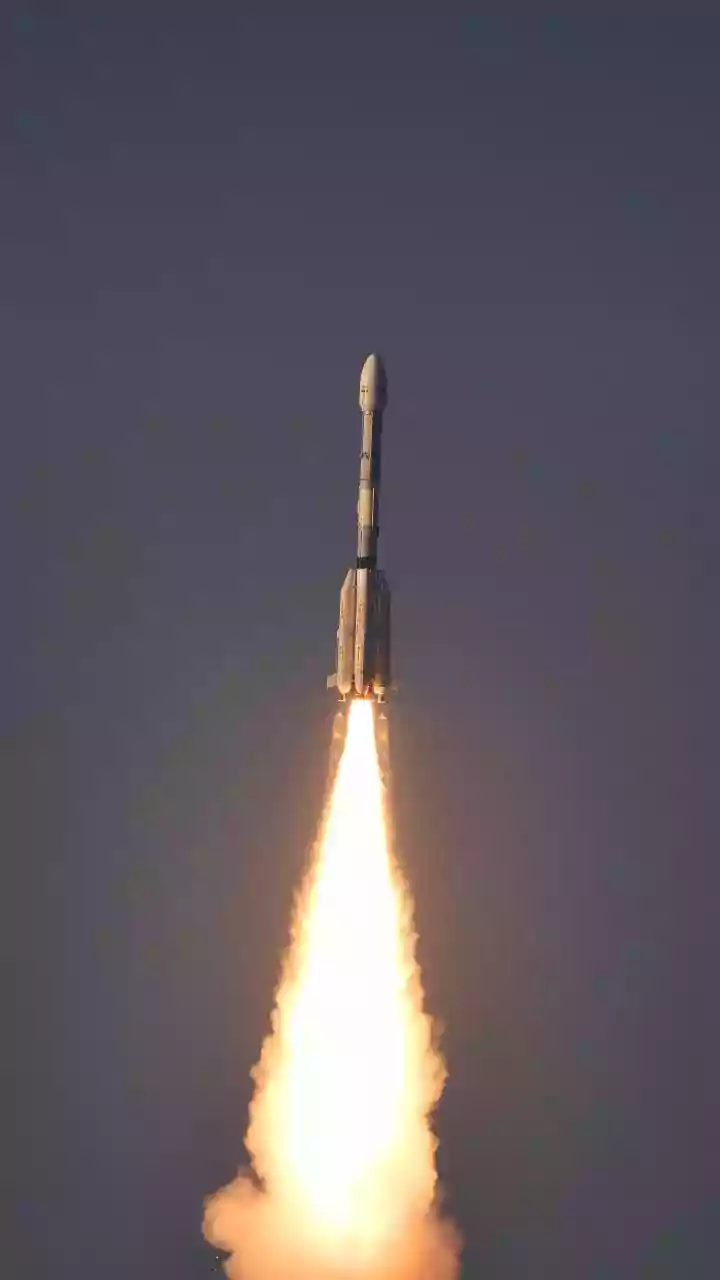
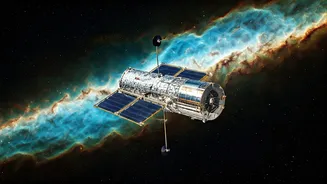
The primary reason infrared astronomy is now a household topic is the James Webb Space Telescope (JWST). Launched in late 2021, this observatory is an engineering marvel designed specifically to capture the universe in infrared light with unprecedented sensitivity. With its massive 6.5-meter gold-coated mirror, it can collect faint light from the most distant corners of space, effectively looking back in time. While previous infrared telescopes like the Spitzer Space Telescope paved the way, JWST's power and clarity have delivered a quantum leap in our ability to see the infrared cosmos. This has led to a flood of discoveries and images that are as scientifically profound as they are beautiful.
Looking Back to the Dawn of Time
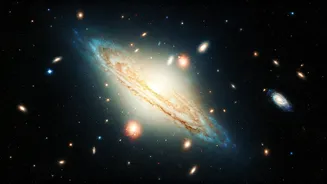
Beyond peering through dust, infrared astronomy is crucial for studying the very first stars and galaxies that formed after the Big Bang. Because the universe is expanding, light from these extremely distant objects gets stretched as it travels across billions of years to reach us. This phenomenon, known as 'redshift', shifts the visible and ultraviolet light originally emitted by these first galaxies into the infrared part of the spectrum. To see the cosmic dawn, you must have an infrared eye. JWST is powerful enough to spot these incredibly faint, redshifted galaxies, giving us clues about how the universe evolved and how supermassive black holes might have formed so quickly.
A New Era of Discovery
The impact of JWST's infrared vision is already staggering. Astronomers are mapping the atmospheres of planets orbiting other stars, discovering complex molecules, and even finding planets that survived the death of their star. Recent observations have even hinted at mysterious substances on Pluto and Titan that have never been seen before. These capabilities are not just for professional scientists; public engagement has soared, and citizen scientists are even using the data to help discover new objects. With demand for observation time on the telescope far exceeding supply, it's clear that this is just the beginning. Infrared astronomy hasn't just entered the conversation; it's rewriting the book on the history of our universe.