





India is making a multi-billion-dollar bet to become a global player in semiconductor manufacturing. This ambitious national strategy, backed by significant government incentives, aims to reduce import reliance and build a resilient tech ecosystem.
The Big Picture: What is the $23 Billion Push?
India
has launched a comprehensive strategy, driven by the India Semiconductor Mission (ISM), to establish a domestic chip manufacturing ecosystem. The figure of around $23 billion represents the total investment outlay, combining government incentives and private capital for multiple approved projects. The government's Production Linked Incentive (PLI) scheme provides significant financial support, in some cases up to 50% of a project's capital expenditure, to attract global and domestic companies. This concerted effort aims to move India from being a major consumer and designer of chips to a significant manufacturer, reducing its heavy dependence on imports from countries like Taiwan, South Korea, and China.
Focus on Assam: A Strategic Choice
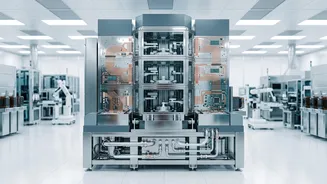
A cornerstone of this initiative is Tata Electronics' massive semiconductor facility in Jagiroad, Assam, with an investment of ₹27,000 crore (approximately $3.6 billion). This plant is not a high-end fabrication unit but an OSAT (Outsourced Semiconductor Assembly and Test) or ATMP (Assembly, Testing, Marking, and Packaging) facility. These facilities perform the critical final steps in chip production: taking finished wafers from fabrication plants, cutting them into individual chips, assembling them into protective packages, and testing them. The choice of Assam is strategic, aiming to industrialize India's northeast and leverage the region's resources. Commercial production is expected to begin in 2027.
The Players and Their Roles
The Tata Group has emerged as a key domestic champion in India's semiconductor ambitions. Besides the Assam OSAT plant, Tata Electronics is also building India's first major commercial chip fabrication plant in Dholera, Gujarat, in partnership with Taiwan's Powerchip Semiconductor Manufacturing Corp (PSMC). Other major global players are also setting up shop. US-based Micron Technology has established an ATMP facility in Sanand, Gujarat. Additionally, companies like CG Power are partnering with international firms like Renesas to set up packaging facilities. The government's role, through the India Semiconductor Mission, is to provide the policy framework and financial incentives to de-risk these massive investments.
Why Now? Global Supply Chains and Geopolitics
The global pandemic exposed the extreme vulnerability of supply chains, especially for critical components like semiconductors. A worldwide chip shortage halted production lines for everything from cars to consumer electronics, highlighting the risks of concentrating manufacturing in a few locations. This has spurred a global race to diversify semiconductor production. For India, building a domestic industry is not just an economic goal but a strategic one. It aligns with a broader geopolitical trend of 'friendshoring' and reducing dependence on China, positioning India as a reliable alternative for global technology companies.
The Road Ahead: Hurdles and Challenges
Despite the momentum, success is not guaranteed. Semiconductor manufacturing is incredibly complex and capital intensive. One of the biggest challenges is the need for flawless infrastructure, including an uninterrupted supply of ultra pure water and stable power, which has been a hurdle in the past. Another significant challenge is developing a highly skilled workforce. While India has a large pool of chip designers, it faces a shortage of technicians and engineers with specialised experience in the fabrication and packaging process. Competing with established ecosystems in Taiwan, South Korea, and China, which have decades of experience and deeply integrated supply chains, will require sustained effort and stable policies.
What Success Means for India
If successful, this push could fundamentally transform India's economy. A robust semiconductor ecosystem is expected to create hundreds of thousands of direct and indirect high skilled jobs. It would significantly reduce India's large import bill for electronics, saving valuable foreign exchange. Furthermore, a local supply of chips would boost the entire electronics manufacturing sector, from smartphones and automotive to defence and AI infrastructure. By moving up the value chain from assembly to core component manufacturing, India aims to secure its technological future and establish itself as a genuine powerhouse in the global high tech landscape.