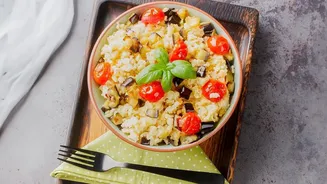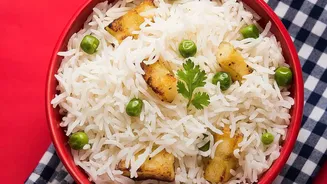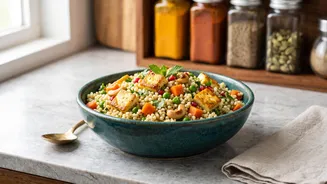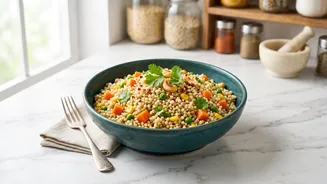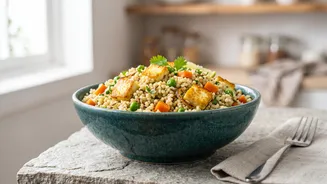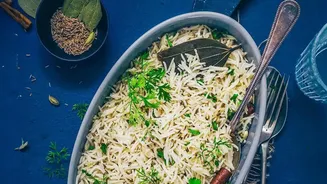



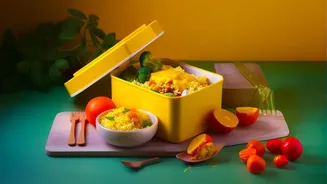
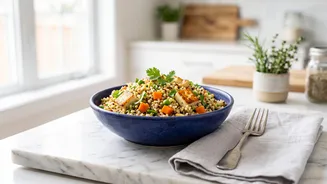

In the endless search for a lunch that's both satisfying and simple, millet pulao emerges as a strong contender. It's a practical, one-pot meal that offers wholesome goodness without needing a list of unbelievable health promises to justify its place
on your plate.
Understanding Millets Without The Hype
Millets are a group of small-seeded grasses that have been part of Indian food traditions for centuries. Varieties like foxtail millet (korralu/navane), kodo millet (varagu), and barnyard millet (jhangora) are increasingly popular alternatives to rice. Instead of viewing them as a 'miracle food', it is more practical to see them for what they are: whole grains that are a good source of dietary fibre, protein, and essential minerals like iron and magnesium. Their high fibre content helps you feel full for longer, which can aid in managing appetite and providing sustained energy, making them a sensible choice for a midday meal. They are also naturally gluten-free.
Choosing the Right Millet for Pulao
Not all millets are interchangeable. For a fluffy, rice-like pulao, you should opt for whole-grain millets. Foxtail millet, little millet, and kodo millet are excellent choices because they tend to hold their shape well when cooked, resulting in separate, non-sticky grains. Foxtail millet, in particular, has a mild, nutty flavour that pairs beautifully with the spices and vegetables in a pulao. Other varieties like ragi (finger millet) and bajra (pearl millet) are more commonly used in flour form for rotis or porridge and are not ideal for making pulao. When you're trying a millet for the first time, it's wise to buy a small quantity to see how you like its taste and texture before making it a regular pantry staple.
A Practical Recipe for Millet Pulao
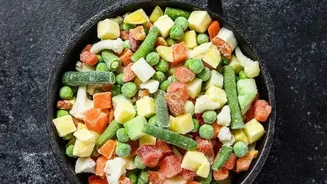
This one-pot recipe is designed for simplicity and flavour. It serves two. Ingredients: - 1 cup foxtail or kodo millet - 2 cups water or vegetable broth - 1 tablespoon ghee or oil - 1 teaspoon cumin seeds - 2 cloves, 1 small piece of cinnamon, and 1 bay leaf - 1 medium onion, thinly sliced - 1 teaspoon ginger-garlic paste - 2 green chillies, slit - 1.5 cups mixed vegetables (carrots, peas, beans, corn) - A handful of fresh mint and coriander leaves, chopped - Salt to taste - Juice of half a lemon (optional) Instructions: 1. Rinse the millet thoroughly under running water. Soaking it for at least 20–30 minutes helps it cook evenly. Drain before use. 2. Heat ghee or oil in a heavy–bottomed pan or pressure cooker. Add the cumin seeds, cloves, cinnamon, and bay leaf, and let them sizzle for a moment. 3. Add the sliced onions and sauté until they become soft and translucent. Add the ginger–garlic paste and green chillies and cook for another minute until fragrant. 4. Add the mixed vegetables and sauté for 3–4 minutes until they are slightly tender. 5. Add the chopped mint and coriander leaves, followed by the drained millet. Stir gently for a minute. 6. Pour in the 2 cups of water or broth and add salt. Bring the mixture to a rolling boil. 7. Reduce the heat to low, cover the pan, and let it simmer for about 15–20 minutes, or until all the water is absorbed and the millet is tender. Avoid stirring during this time. 8. Once cooked, turn off the heat and let the pulao rest, covered, for at least 5–10 minutes. This step is crucial for getting fluffy grains. 9. Open the lid, add a squeeze of lemon juice if you like, and gently fluff the pulao with a fork before serving.
Tips for a Perfect, Non–Mushy Pulao
The most common issue when cooking millets is ending up with a mushy texture. The key to avoiding this is the water ratio and cooking method. A $1$:$2$ ratio of millet to water is a reliable starting point for a fluffy, pilaf–style dish. Cooking on a gentle simmer rather than a high boil is also important, as it allows the grains to absorb the liquid evenly without breaking down. Finally, never skip the resting period. Letting the pulao sit off the heat allows the grains to firm up and separate.
Making It a Truly Balanced Lunch
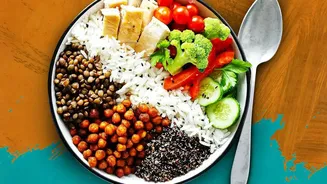
A balanced meal typically includes a source of carbohydrates, protein, healthy fats, and plenty of vegetables. This millet pulao already covers carbohydrates from the millet and vitamins from the vegetables. To make it a more complete meal, simply pair it with a protein–rich side. A bowl of plain curd or a simple raita is an excellent and traditional accompaniment that adds protein and probiotics. A side salad or a simple dal can also boost the protein and fibre content, ensuring your lunch keeps you energised and satisfied through the afternoon.