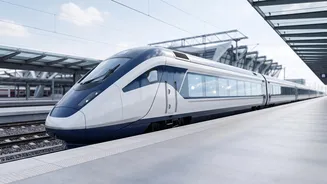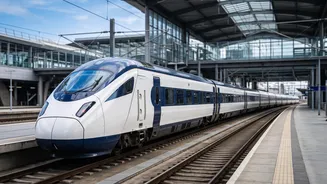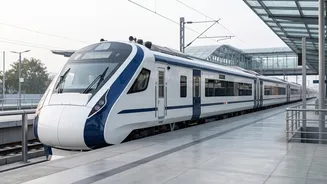







Indian Railways is gearing up for a significant upgrade in its long-distance travel offerings. Ambitious new designs for an expanded sleeper trainset are in the works, promising a substantial increase in passenger capacity and modern amenities.
A Major Leap in Passenger Capacity
The headline
figure of 1,431 berths represents a significant step up in capacity, though this specific number appears to be part of broader design considerations rather than a final fixed configuration. Current Vande Bharat sleeper trains, which began service in January 2026, typically feature 16 coaches with a capacity of around 823 berths. However, Indian Railways is already working on an even larger, 24-coach version. This expanded trainset is designed to accommodate 1,224 passengers, a nearly 50% increase over the 16-coach model. This move is a direct response to the high demand seen on initial routes like the one between Howrah and Guwahati, which has reportedly been running at over 100% occupancy. By increasing the number of berths per train, the Railways aims to serve more passengers on high-density routes and improve availability.
The Next Evolution of Vande Bharat
This new generation of sleeper trains is an extension of the successful Vande Bharat platform, which has already transformed daytime inter-city travel in India. While the initial Vande Bharat trains were chair-car services designed for shorter, daytime journeys on Shatabdi Express routes, the sleeper variant is intended for long-haul, overnight travel, positioning it as a modern successor to the iconic Rajdhani Express trains. The first Vande Bharat sleeper service was launched on January 17, 2026. These trains are designed to run at speeds up to 160-180 kmph, significantly reducing travel time on key corridors. For instance, new services planned for the Mumbai-Bengaluru and Delhi-Varanasi routes are expected to cut travel times by several hours compared to existing trains.
A Focus on Passenger Comfort and Modern Amenities
The new sleeper trainsets are not just about adding more berths; they are about fundamentally enhancing the overnight travel experience. The designs incorporate a range of modern, aircraft-style features. Passengers can expect ergonomically designed, bettererched berths, improved ladders for easier access to upper berths, and advanced amenities. Coaches will be equipped with automatic doors, sensor-based water taps, bio-vacuum toilets with odour control systems, and individual reading lights and charging points for every passenger. Some designs even include features like shower areas in First AC, integrated AC vents, and switchable privacy glass for cabin windows, allowing passengers to turn the glass opaque at the touch of a button. The focus is on creating a quieter, smoother, and more comfortable journey with superior noise reduction and suspension systems.
Manufacturing and Timelines
The development and manufacturing of these advanced trainsets are a cornerstone of the 'Make in India' initiative. Several entities are involved in production, including the Integral Coach Factory (ICF) in Chennai, BEML in Bengaluru, and a consortium led by Rail Vikas Nigam Limited (RVNL) in Latur. The first prototype was rolled out by BEML in September 2024. While there have been some adjustments to timelines, various manufacturers are pushing ahead. The RVNLled joint venture, Kinet Railway Solutions, now expects its first prototype to be ready by the end of the current financial year, which concludes in March 2027. Indian Railways plans a large scale rollout, with over 250 new Vande Bharat sleeper trainsets slated for introduction across the country in phases. This ambitious plan underscores a major strategic shift towards modernising the entire long distance rail network.