

The High Cost of an Umbilical Cord
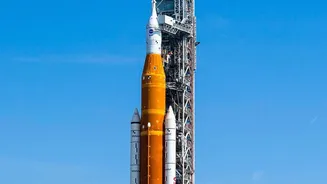
For decades, human spaceflight has been tethered to Earth by a long, expensive logistical chain. Every litre of water and every kilogram of oxygen must be launched into orbit, a process that costs thousands of dollars per kilogram. This reliance on resupply
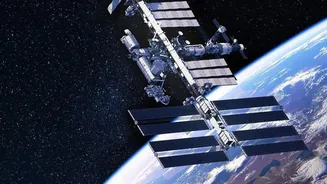
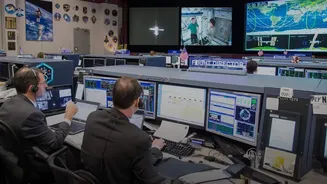
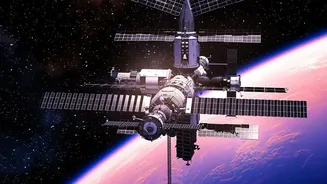
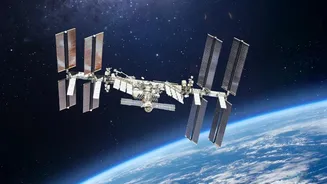
missions from the ground has been a fundamental constraint on the duration and complexity of missions. The International Space Station (ISS) requires tonnes of supplies each year to support its crew. A significant portion of that up-mass is dedicated to life-sustaining consumables, limiting the volume and weight available for scientific experiments and other hardware. Breaking this dependency has been a primary goal for space agencies, not just for efficiency, but for enabling future long-duration missions where resupply simply isn't an option.
Closing the Loop on Water
The most significant recent advance has come in the form of water recycling. The Environmental Control and Life Support System (ECLSS) on the ISS is a marvel of engineering designed to reclaim every possible drop of water. It captures moisture from the air, including astronauts' breath and sweat, and purifies wastewater. However, the system previously had a final hurdle: the salty, waste-filled liquid left over from urine processing, known as brine. For years, this brine, which still contained a significant amount of water, could not be fully processed, capping total water recovery at around 94%. The game-changer has been the Brine Processor Assembly (BPA). This device uses a special membrane to evaporate water from the brine, which is then collected as humidity by the station's regular systems. With the BPA fully operational, NASA has demonstrated its ability to recover up to 98% of all water on board, a critical milestone.
Making Air From Yesterday's Coffee
This near-total water recovery has a direct and profound impact on air supply. The station's primary Oxygen Generation System works through electrolysis, a process that splits recycled water molecules (H2O) into hydrogen and breathable oxygen. By dramatically increasing the amount of available recycled water, the new systems ensure the oxygen generator can run almost continuously without needing water to be shipped from Earth. The other half of the breathing equation is removing the carbon dioxide (CO2) that astronauts exhale. Systems like ESA's Advanced Closed Loop System use chemical processes to scrub CO2 from the air. In some cases, through a process called the Sabatier reaction, this captured CO2 is then combined with hydrogen (a byproduct of oxygen generation) to create more water, which can be looped back into the system to create more oxygen. This elegant, closed-loop approach means astronauts are, in essence, breathing air derived from the water they and their crewmates have already used.
A New Blueprint for Deep Space
While these breakthroughs have a significant economic impact for the ISS, saving millions in launch costs, their true importance lies in what they enable for the future. For missions to the Moon and Mars, there is no possibility of regular resupply missions. A round trip to Mars could take two to three years, making self-sufficiency an absolute requirement for survival. The highly efficient, closed-loop life support systems being perfected on the ISS are the direct technological ancestors of the systems that will keep astronauts alive on their journey to the Red Planet. These systems must not only be efficient but also robust and reliable, as a critical failure millions of kilometres from home would be catastrophic. The ISS serves as the ultimate testbed, allowing engineers to identify failure points and refine the technology in a real microgravity environment before committing them to deep space missions.
Innovations Beyond Water and Air
The drive for self-sufficiency extends beyond just air and water. Researchers are also tackling the challenge of oxygen generation in microgravity with new methods. One promising breakthrough uses magnets to separate gas bubbles from liquid during electrolysis, a process that is currently handled by heavy, complex centrifuges. This could lead to lighter, more reliable, and lower-maintenance oxygen systems for future spacecraft. Other concepts, known as bioregenerative life support systems, aim to use plants or algae to naturally produce food and oxygen while processing waste, creating a miniature, self-sustaining ecosystem for long-duration missions. While still in earlier stages of development, these technologies represent the ultimate goal: a fully closed loop where all essential resources are regenerated, finally severing the umbilical cord to Earth for good.