





The Traditional Route: Physical Gold
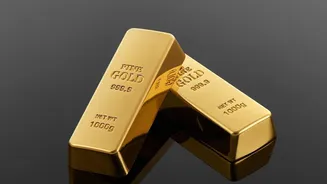
For generations, owning gold meant holding it in your hands as jewellery, coins, or bars. This tangible asset provides a sense of security and cultural value. However, this is the most expensive way to invest in gold. The primary cost is 'making charges',
which can range from 3% for machine-made coins to over 25% for intricate, handcrafted jewellery. On top of the gold's value and the making charges, a 3% Goods and Services Tax (GST) is levied. Then comes the issue of storage. Keeping it at home carries a risk of theft, while a bank locker can cost anywhere from ₹2,000 to ₹12,000 annually, with the bank's liability often capped at a value far lower than the gold's worth. When you resell jewellery, you almost never recover the making charges, and jewellers may deduct an additional percentage from the prevailing gold rate.
The Modern Convenience: Digital Gold
Digital gold allows you to buy 24K gold online through various apps and platforms, often starting with as little as ₹1. The seller stores an equivalent amount of physical gold in insured vaults on your behalf. This method eliminates the immediate costs of making charges and storage fees, which are often free for the first few years (typically up to five years). However, it's not cost-free. Like physical gold, every purchase of digital gold attracts a 3% GST. Furthermore, platforms have a 'spread' between their buying and selling prices, which typically ranges from 2% to 6%. This means the price you sell at is lower than the price you buy at, acting as an indirect fee. While storage may be free initially, some providers begin charging a nominal annual fee of around 0.3% to 0.5% after the initial period. It is also important to note that digital gold is not currently regulated by SEBI or the RBI.
The Market-Linked Path: Gold ETFs
Gold Exchange Traded Funds (ETFs) are financial instruments that trade on stock exchanges, with each unit generally representing one gram of 99.5% pure gold. To invest, you need a demat and trading account. This is by far the most cost-effective method for pure investment purposes. A major advantage is that there is no 3% GST on purchase, providing an immediate cost saving compared to physical and digital gold. The primary recurring cost is the 'expense ratio'—an annual management fee charged by the fund house, typically ranging from 0.50% to 0.80%. When you buy or sell units, you also pay a small brokerage fee to your stockbroker. Because Gold ETFs are highly liquid and trade on the stock market, the buy-sell price spread is usually very narrow. You don't have to worry about purity, storage, or insurance, as the fund house manages the physical gold stored in secure vaults.
Cost Breakdown: A Head-to-Head Comparison
Let's put the costs side-by-side. Entry Costs: Physical gold is the highest, with 3% GST plus making charges (3-25%+). Digital gold follows with 3% GST and a buy-sell spread (2-6%). Gold ETFs are the clear winner, with no GST and only minor brokerage fees upon entry. Storage Costs: Physical gold requires either risky home storage or annual locker fees (₹2,000-₹12,000). Digital gold typically offers free storage for up to 5 years, after which a small fee may apply. Gold ETFs have no direct storage costs for the investor, as this is covered within the expense ratio. Recurring Costs: Physical gold has locker fees. Digital gold may have storage fees after a few years. Gold ETFs have an annual expense ratio (around 0.5-0.8%). Over a long period, the ETF expense ratio is often significantly lower than the combination of charges associated with physical gold.