





From Cold War Rivals to Global Partners
Forget the black-and-white footage of the 1960s space race, which pitted the United States against the Soviet Union in a tense duel for dominance. Today's push to return to the moon—and this time, to stay—is defined by cooperation, not competition. The
guiding framework for this new era is the Artemis Accords, a U.S.-led set of principles for safe and transparent space exploration. India became the 27th nation to sign these accords in 2023, signaling a major shift from its historically independent path in space. In August 2026, that partnership deepened when NASA formally invited ISRO to participate in its moon base program during a joint working group meeting in Bengaluru, India. This isn't just a symbolic gesture; it's a strategic move to build a coalition capable of tackling the immense challenge of creating a sustainable human presence on another celestial body.
What India's ISRO Brings to the Table
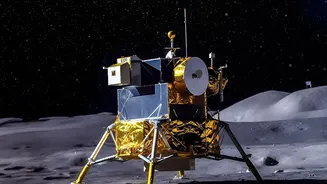
So why is NASA so keen to partner with India? The answer lies in ISRO's impressive and growing track record. In 2023, India became just the fourth country to successfully soft-land a spacecraft on the moon with its Chandrayaan-3 mission, which touched down near the coveted lunar south pole. This achievement was significant not just for its technical success but for its cost-effectiveness, a hallmark of ISRO's approach known as "frugal engineering." India has proven it can execute complex deep-space missions, like its Mars Orbiter Mission and the recent moon landing, for a fraction of the cost of similar missions from other nations. This expertise is incredibly valuable for a project as expensive and ambitious as a permanent moon base. Beyond launch capabilities, ISRO brings scientific prowess, with plans for a lunar sample-return mission (Chandrayaan-4) and joint exploration with Japan to hunt for water-ice deposits. This experience is directly relevant to the goals of the Artemis program, which is focused on the resource-rich south pole.
A Win-Win for the United States
For NASA, the benefits are clear and substantial. Building a moon base is an astronomically expensive and logistically daunting undertaking. Partnering with capable allies like ISRO allows the U.S. to share the financial burden and leverage a wider pool of scientific and engineering talent. Contributions from international partners could range from scientific instruments and robotic systems to communication and navigation technologies. This collaboration accelerates the timeline for establishing the base, which NASA hopes to have operational in phases starting in the late 2020s and early 2030s. Furthermore, the partnership extends beyond the moon. It strengthens a critical geopolitical alliance between the world's two largest democracies and fosters interoperability between their space technologies. The joint NASA-ISRO Synthetic Aperture Radar (NISAR) satellite, a sophisticated Earth-observation mission, is a prime example of this successful technical integration already in motion.
The Road Ahead: Challenges and Opportunities
While the potential is enormous, the path forward requires navigating significant complexities. Integrating different engineering philosophies, technologies, and operational standards between two major space agencies is a considerable challenge. Both nations must also secure long-term political and financial commitment to see the multi-decade project through. For India, participation offers a chance to fast-track its own ambitious goals, which include a domestic space station by 2035 and landing an Indian astronaut on the moon by 2040. By working with NASA, ISRO can gain invaluable experience in human spaceflight, deep-space habitats, and lunar geology, potentially leapfrogging a decade of independent development. This collaboration avoids the need to "reinvent the wheel" on foundational technologies, allowing both agencies to focus on pushing the frontiers of exploration forward, together.