




What is a PUC Certificate?
A Pollution Under Control (PUC) certificate is a mandatory document proving that your vehicle's emissions are within the legal limits set by the government. It is required under the Central Motor Vehicles Rules, 1989, for all vehicles with internal combustion
engines, including petrol, diesel, and CNG models. The goal is to control air pollution by ensuring vehicles on the road are not emitting excessive harmful gases like carbon monoxide and hydrocarbons. Think of it as a periodic health check-up for your vehicle's environmental impact. Electric vehicles, having no tailpipe emissions, are exempt from this requirement.
New Rules for New Vehicles
For first-time buyers, the initial period is straightforward. Historically, a new car or two-wheeler came with a PUC certificate valid for one year from the date of registration. However, the government has recently updated these rules. Under the Central Motor Vehicles (Sixteenth Amendment) Rules, 2026, which came into effect in November 2026, the validity has been significantly extended for newer, cleaner BS-VI compliant private vehicles. If you buy a new BS-VI private car or two-wheeler, your first PUC certificate is now valid for three years. This change aims to reduce the compliance burden on owners of modern vehicles that have much lower emission levels.
Understanding the Renewal Timelines
The latest rules create a tiered system based on the vehicle's emission standard (BS-IV, BS-VI, etc.) and age. For first-time buyers of BS-VI private vehicles, after the initial three-year validity expires, the renewal schedule is as follows: Vehicles between three and six years old still fall under the three-year validity rule. Once your vehicle is more than six years old but up to ten years old, you must renew the PUC certificate annually (every one year). For BS-VI vehicles older than ten years, the validity is shortened to six months. This sliding scale ensures that as vehicles age and are more likely to pollute, they are tested more frequently.
What About Older Emission Standards?
If you purchase a used vehicle, its PUC validity will depend on its Bharat Stage (BS) emission norm. The new rules have also clarified these timelines. For vehicles compliant with BS-IV norms, the PUC certificate is valid for six months. For even older vehicles meeting BS-I, BS-II, or BS-III standards, the certificate is only valid for three months at a time. It is crucial to check the vehicle's registration certificate to identify its emission standard and determine the correct PUC renewal frequency.
How to Get and Renew Your PUC
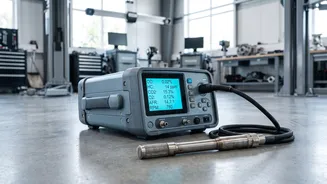
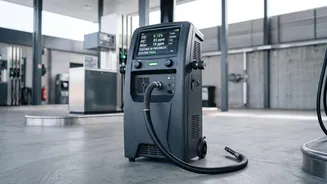
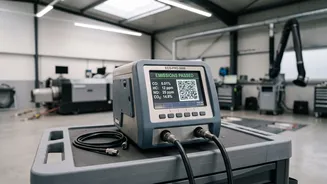
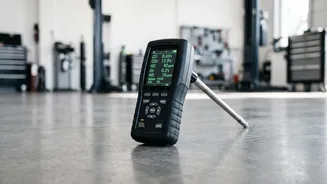
The process is simple and quick. You must take your vehicle to a government-authorised emission testing centre. These are commonly found at petrol pumps and standalone workshops. The only document you typically need is your vehicle's Registration Certificate (RC). A technician will insert a probe into your vehicle's exhaust pipe while the engine is running to measure the emissions. The test takes only a few minutes. If the readings are within the permissible limits, a certificate is generated instantly and the data is uploaded to the central Vahan database. The cost is nominal, usually ranging from ₹60 to ₹100 for two-wheelers and four-wheelers.
The Cost of Non-Compliance
Ignoring your PUC certificate's expiry date can be expensive. Driving without a valid PUC is an offence under Section 190(2) of the Motor Vehicles Act. This can attract a significant fine of up to ₹10,000 for a first-time offence, and may also include imprisonment for up to three months. Penalties can vary by state, but they are consistently steep. Furthermore, rules in some regions, like Delhi, have linked PUC status to fuel access, meaning petrol pumps can refuse to serve vehicles with an expired certificate. Insurers may also require a valid PUC for renewing your motor insurance policy.