

Why A Daily Practice Works
The key to improving flexibility isn't about twisting yourself into a pretzel once a week; it's about gentle, consistent practice. When you stretch daily, your muscles, tendons, and ligaments gradually adapt and lengthen. This consistent movement increases
blood flow, warms up the muscles, and allows them to relax and release tension safely. Studies have shown that a regular yoga practice can significantly improve flexibility in as little as eight weeks, making it an effective way to feel less stiff and move with greater ease. This approach not only prevents injury but also improves posture and overall mobility for everyday activities.
Cat-Cow Stretch (Marjaryasana-Bitilasana)
This is the perfect starting pose to warm up your spine and relieve tension in your back. Begin on your hands and knees, with your wrists directly under your shoulders and knees under your hips. As you inhale, drop your belly towards the mat, lifting your chest and tailbone to create an arch in your back (Cow Pose). As you exhale, round your spine toward the ceiling, tucking your chin to your chest and drawing your navel in (Cat Pose). Flow between these two movements for 8-10 slow, controlled breaths, synchronizing each movement with your breath. This simple sequence promotes spinal flexibility and mobility.
Downward-Facing Dog (Adho Mukha Svanasana)
An iconic yoga pose for a reason, Downward-Facing Dog offers a comprehensive, full-body stretch. From your hands and knees, tuck your toes and lift your hips up and back, forming an inverted 'V' shape with your body. Spread your fingers wide and press firmly into the mat. You can keep your knees generously bent at first, especially if you have tight hamstrings. Gently 'pedal' your feet by bending one knee and then the other to deepen the stretch in your calves and hamstrings. This pose lengthens the entire backside of the body, from your heels to your hands, while also opening up the shoulders.
Low Lunge (Anjaneyasana)
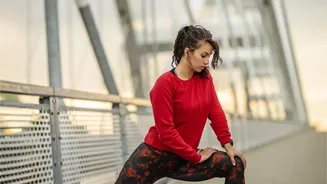
Prolonged sitting can lead to incredibly tight hip flexors. The Low Lunge is a fantastic counter-pose that targets this stubborn area. From Downward-Facing Dog, step one foot forward between your hands. Lower your back knee to the floor, making sure your front knee is stacked directly above your ankle. You can rest your hands on your front thigh or raise them overhead for a deeper stretch. You should feel a significant stretch along the front of your back leg and hip. This pose is crucial for improving mobility in the hips and releasing lower body tension.
Standing Forward Bend (Uttanasana)
This pose is excellent for releasing the entire back line of the body, including the hamstrings, calves, and spine. Stand with your feet hip-width apart. As you exhale, hinge at your hips and fold your upper body over your legs. Allow your head, neck, and shoulders to relax completely, hanging like a rag doll. Keep a slight bend in your knees to protect your lower back and reduce intensity. Let gravity do the work, gently pulling you into a deeper stretch. This pose not only improves flexibility but also helps to calm the mind and relieve stress by increasing circulation to the head.
Bridge Pose (Setu Bandhasana)
After a day of hunching over a desk or phone, Bridge Pose provides a much-needed opening for the front of the body. Lie on your back with your knees bent and feet flat on the floor, hip-width apart. Place your arms alongside your body with your palms facing down. On an exhale, press into your feet and lift your hips off the floor. This creates a stretch across the chest, neck, and spine, counteracting the effects of poor posture. It also gently stretches the hip flexors.