



A Mission's Encore Performance
The story of Hayabusa2 was already a resounding success. Operated by the Japan Aerospace Exploration Agency (JAXA), the probe launched in 2014, traveled to the near-Earth asteroid Ryugu, and, in an audacious feat of engineering, collected pristine samples
from its surface. In December 2020, it successfully returned this precious cargo to Earth, providing scientists with a direct look into the building blocks of our solar system. For most missions, this would be the triumphant finale. But when mission controllers checked Hayabusa2's status after it dropped off its sample capsule, they found a healthy spacecraft with roughly half of its fuel still in the tank. This wasn't a mistake; it was an opportunity. JAXA quickly approved a new, daring extended mission, transforming Hayabusa2 from a returning hero into a veteran explorer heading back into the void.
The Power of Patient Propulsion
The secret to Hayabusa2's longevity lies in its propulsion system: four highly efficient μ10 ion engines. Unlike traditional chemical rockets that provide a powerful but short-lived burst of thrust by burning fuel, ion engines work on a different principle. They use electricity from the spacecraft's solar panels to ionize xenon gas, creating charged particles that are then accelerated by an electric field and expelled to generate a tiny amount of thrust. The force is incredibly gentle—often compared to the pressure of a piece of paper resting on your hand. However, these engines can run for thousands of hours, continuously and patiently accelerating the spacecraft over months and years. This extreme fuel efficiency is what left Hayabusa2 with so much xenon propellant, making a decade-long extended mission not just possible, but a practical next step.
A Grand Tour on a Shoestring Budget
With fuel to spare, the challenge became one of trajectory. JAXA's mission planners charted a new, multi-year course that is a masterclass in orbital mechanics. The spacecraft isn't simply pointing itself toward a new target. Instead, it's embarking on a complex cosmic dance. In July 2026, it performed a high-speed flyby of an asteroid named (2001) CC21, also known as Torifune. This maneuver wasn't just for sightseeing; it served as a valuable test of navigating close to a small object at high speed, a key capability for future planetary defense missions. The main journey will then involve two Earth swing-bys in 2027 and 2028. By flying close to our planet, Hayabusa2 will use Earth's gravity like a slingshot to alter its course and gain speed without burning precious fuel, a technique known as a gravity assist.
The Final, Daring Target
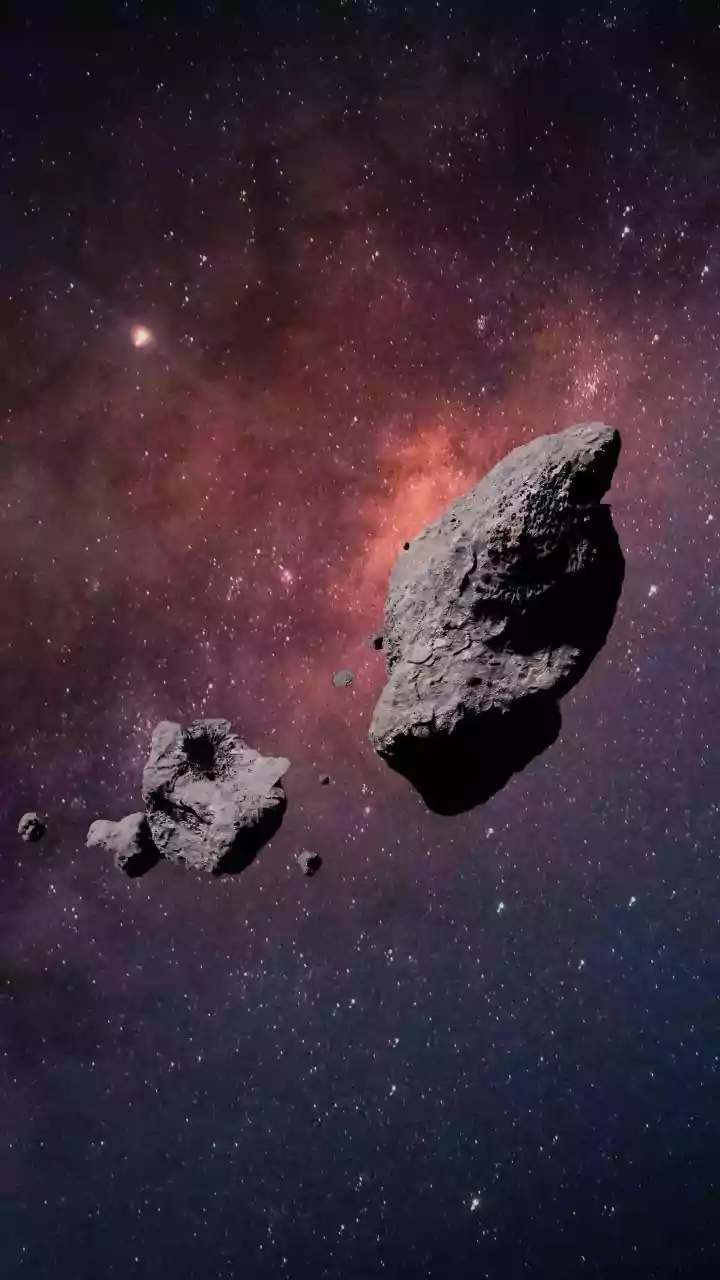
The ultimate destination for this extended tour is a tiny asteroid known as 1998 KY26, with an arrival slated for July 2031. This object presents a new and thrilling challenge. Whereas Ryugu was about 900 meters in diameter, 1998 KY26 is a micro-asteroid, estimated to be only about 11 meters across. It is also a dizzyingly fast rotator, spinning on its axis once every five minutes. Successfully observing, let alone interacting with, such a small and fast-moving target will push the capabilities of Hayabusa2's autonomous navigation systems to their absolute limit. It will be the first time a spacecraft has attempted to rendezvous with such a small body, promising unique scientific insights into a class of asteroid we know very little about. This finale is a testament to JAXA's confidence in both its technology and its operational team, squeezing every last drop of scientific potential from a single, resilient explorer.