



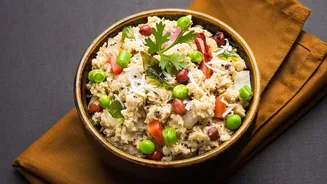
The Power of Finger Millet
Ragi, or finger millet, is a reddish-brown grain that has been a staple in parts of India for thousands of years. Often called a superfood, it boasts an impressive nutritional profile that makes it a fantastic addition to any diet. It is naturally gluten-free,
making it a safe and healthy option for those with gluten sensitivity or celiac disease. One of its standout qualities is its high calcium content; in fact, ragi is one of the best plant-based sources of this essential mineral, crucial for bone health. It is also rich in iron, which helps in maintaining haemoglobin levels, and dietary fibre.
A Breakfast Built for Energy
Starting your day with ragi can make a significant difference to your energy levels. The high fibre content promotes a feeling of fullness, which can help reduce overall calorie intake and prevent unhealthy snacking between meals. This fibre also aids digestion and supports good gut health. Unlike simple carbohydrates that can cause a quick spike and crash in blood sugar, ragi contains complex carbohydrates that have a low glycaemic index. This means they release energy slowly, providing a steady supply to keep you focused and active throughout the morning.
The Basic Savoury Batter
Whipping up ragi crepe batter is surprisingly simple. For a quick, instant version, you'll need just a few core ingredients. A common base combines ragi flour with a smaller amount of rice flour and sometimes a spoonful of fine semolina (rava) to achieve a crispier texture. To make a batter for about two people, start by whisking one cup of ragi flour with a quarter cup of rice flour. To this, add a quarter cup of curd or yogurt and enough water (about one to one-and-a-quarter cups) to form a smooth, lump-free batter. The consistency should be relatively thin and pourable, similar to a traditional rava dosa batter. Let this mixture rest for about 15-20 minutes to allow the flours to hydrate.
Adding Flavour and Spice
This is where you can truly make the crepes your own. The base batter has a mild, earthy taste that pairs beautifully with a variety of savoury additions. Finely chopped onions, green chillies, grated ginger, and fresh coriander leaves are classic choices that add a burst of freshness and spice. A teaspoon of cumin seeds can also be stirred into the batter for an extra layer of flavour. Mix these ingredients directly into your rested batter right before you begin cooking. Don't be afraid to experiment with other additions like grated carrots, chopped curry leaves, or even a pinch of black pepper.
Cooking the Perfect Crepe
To cook the crepes, heat a non-stick tawa or a cast-iron skillet over a medium-high flame until it's properly hot. A good test is to sprinkle a few drops of water; they should sizzle and evaporate immediately. Lightly grease the pan with a little oil. Stir your batter well before making each crepe, as the flour tends to settle at the bottom. Pour a ladleful of the batter onto the hot pan, starting from the edges and working your way to the centre to create a thin, lacy crepe. Drizzle a little oil around the edges and cook for a couple of minutes until the bottom is golden brown and the edges start to lift from the pan. These crepes are typically cooked on just one side.
Serving and Pairing Ideas
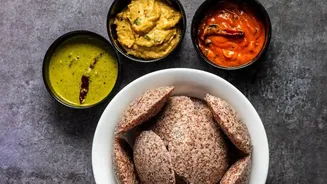
These savoury ragi crepes are best served hot and crisp, straight off the tawa. They pair wonderfully with a range of traditional South Indian accompaniments. Coconut chutney is a classic partner, its mild sweetness balancing the earthy flavour of the ragi. Tomato or onion chutney also works very well, as does a hearty bowl of sambar. For a simpler meal, even a side of plain yogurt or a pickle is enough to complete the dish. You can also add fillings like a simple spiced potato masala to turn them into a more substantial stuffed crepe.